
Category: STRETCH

  • 9 Best Tinted Sunscreens of 2026 for Lightweight Coverage

    9 Best Tinted Sunscreens of 2026 for Lightweight Coverage

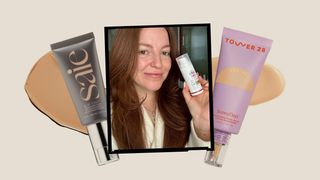
    A collage of an Allure editor holding an EltaMD sunscreen bottle alongside other product silos on a beige backgroundCollage: Paula Balondo; Source images: Courtesy of Allure editors and brandsSave StorySave this storySave StorySave this story

    The search for the best tinted sunscreen comes down to finding that sweet spot between a formula that offers SPF 30+ UV defense and a better-than-skin finish without the dreaded white cast. Unlike a standard sunscreen, a tinted formula uses iron oxides to help camouflage redness, discoloration, and uneven tone while guarding against visible sunlight (a major trigger for melasma and hyperpigmentation).

    Whether the formula relies on 100% mineral blockers like zinc oxide or titanium dioxide, or a hybrid, pairing those minerals with chemical filters, the goal is the same: broad-spectrum coverage without the chalky, ashy finish. With finishes ranging from dewy to soft-matte, finding a formula tailored to your skin type has never been easier. Even better, the top options do double duty as skin care, infusing ingredients like hyaluronic acid, niacinamide, and antioxidants to hydrate, calm, and protect.

    Our Top Tinted Sunscreens

    • Best Overall: EltaMD UV Clear Tinted Sunscreen SPF 46, $47
    • Best Drugstore: CeraVe Hydrating Mineral Sunscreen SPF 30, $16
    • Best for Mature Skin: Isdin Eryfotona Ageless Tinted Mineral Sunscreen, $78
    • Best for Oily Skin: Supergoop Mineral Mattescreen SPF 40, $40

    Frequently Asked QuestionsAccordionItemContainerButtonLargeChevron

    • What is the appeal of tinted sunscreen over a regular sunscreen?
    • What's the difference between mineral, chemical, and hybrid tinted sunscreens? (Is there a difference from traditional sunscreens?)
    • Meet the experts
    • How we test and review products
    • Our staff and testers

    Ahead, we round up the nine best skin tints across every skin type, formula, and budget that Allure editors and dermatologists actually stand behind.

    Best Overall: EltaMD UV Clear Tinted Sunscreen SPF 46
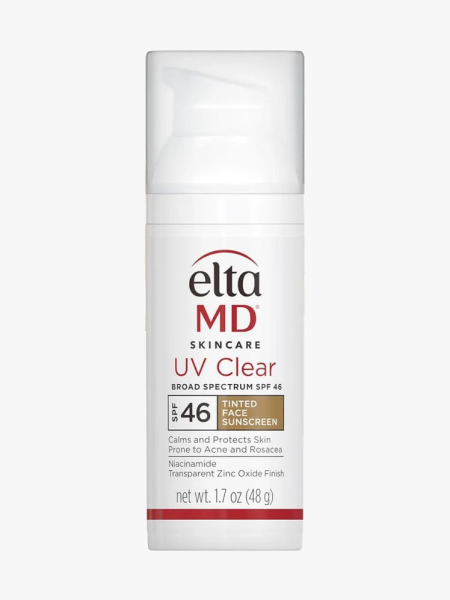
    EltaMD UV Clear Tinted Broad-Spectrum SPF 46 white bottle on light gray backgroundSave to wishlistSave to wishlist

    EltaMD

    UV Clear Tinted Broad-Spectrum SPF 46

    $47

    Amazon

    $47

    Dermstore

    $47

    Bluemercury

    Allure contributor Jailynn Taylor applying the EltaMD UV Clear Tinted Sunscreen SPF 46

    Jailynn Taylor

    Why we love it: Zinc oxide, the mineral active at the core of EltaMD UV Clear Tinted Sunscreen SPF 46, physically reflects UVA and UVB rays off the skin's surface. It's paired with octinoxate, a chemical filter, making this a hybrid formula that combines both approaches to sun protection and one that Dara Spearman, MD, a board-certified dermatologist based in Fort Wayne, Indiana, calls "a staple for patients dealing with acne-prone or easily irritated skin.” Niacinamide rounds out the formula by calming inflammation and helping refine texture over time, while sodium hyaluronate and lactic acid support hydration and smoothness. Its oil-free base means it can be worn under makeup or alone, offering, as Dr. Spearman puts it, "protection without heaviness or congestion." The sheer tint blurs redness and discoloration without leaving a cast, and it's fragrance-free.
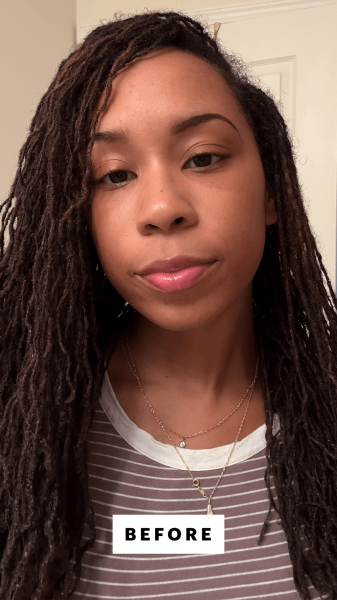
    Taylor before applying the EltaMD UV Clear Tinted Sunscreen SPF 46

    Taylor before applying the EltaMD UV Clear Tinted Sunscreen SPF 46

    Jailynn TaylorTaylor after applying the EltaMD UV Clear Tinted Sunscreen SPF 46
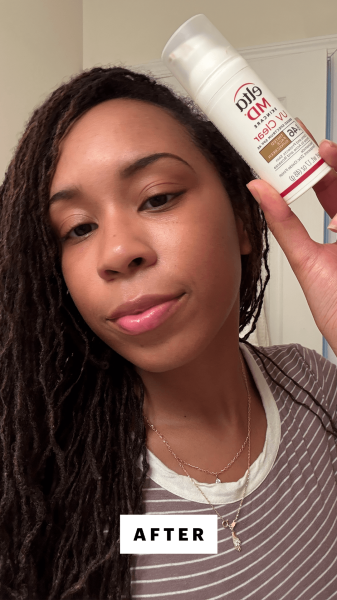
    Taylor after applying the EltaMD UV Clear Tinted Sunscreen SPF 46

    Jailynn TaylorAllure senior news editor Elizabeth Gulino before applying the EltaMD UV Clear Tinted Sunscreen SPF 46
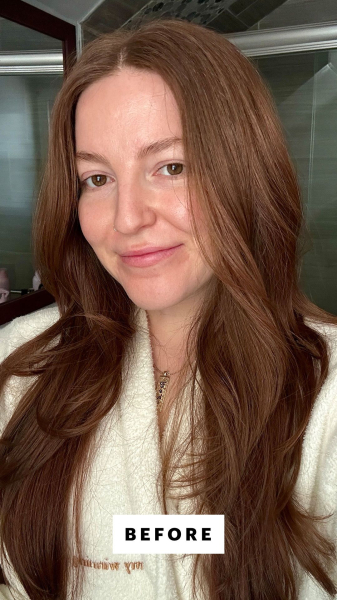
    Allure senior news editor Elizabeth Gulino before applying the EltaMD UV Clear Tinted Sunscreen SPF 46

    Elizabeth GulinoAllure senior news editor Elizabeth Gulino after applying the EltaMD UV Clear Tinted Sunscreen SPF 46
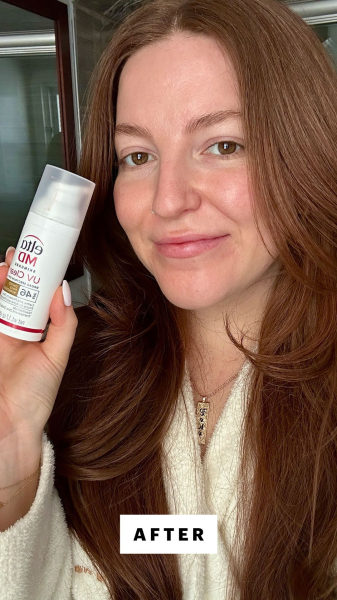
    Gulino after applying the EltaMD UV Clear Tinted Sunscreen SPF 46

    Elizabeth Gulino

    Tester feedback from contributor Jailynn Taylor

    AccordionItemContainerButtonLargeChevron

    “EltaMD’s Tinted Sunscreen has become a staple in my morning skin-care routine. It’s more on the sheer side, so I still reach for concealer when I need to cover deeper discoloration, but the lightweight formula is perfect for evening out my complexion on days when I just need to run errands without doing a full face.​​​​​​​​​​​​​​​​ I love that it doesn’t transfer onto my clothes or hands (I chronically touch my face), and best of all, it hasn’t clogged my pores or caused any breakouts, like other sunscreens I’ve tested.” –Jailynn Taylor, contributor

    Tester feedback from senior staff writer Elizabeth Gulino

    AccordionItemContainerButtonLargeChevron

    “I wear tinted sunscreen pretty much every single day and the EltaMD UV Clear Tinted Sunscreen SPF 46 is my holy grail. The brand's clinicals give me reassurance that the sunscreen is doing its job and protecting my skin, but the tinted aspect makes it a favorite in my base routine—it's tinted enough to cover any redness I have (my most annoying and persistent skin issue) but not so tinted as to look like I'm wearing a foundation. I'm almost out of my current bottle and will definitely be grabbing another soon.” –Elizabeth Gulino, senior staff writer

    More to know

    AccordionItemContainerButtonLargeChevron

    • Sunscreen type: hybrid
    • Key ingredients: zinc oxide (13.1%), niacinamide (5%), sodium hyaluronate (hyaluronic acid), lactic acid
    • Who it's for: all skin types, including sensitive
    • Shades: 2
    • Fragrance-free: yes

    Best Drugstore: CeraVe Hydrating Mineral Sunscreen Deep Sheer Tint
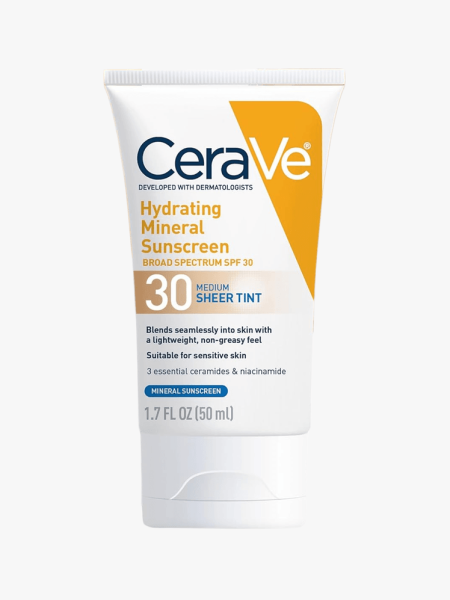
    CeraVe Hydrating Mineral Sunscreen Deep Sheer Tint in branded tube component on a light gray backgroundSave to wishlistSave to wishlist

    CeraVe

    Hydrating Mineral Sunscreen SPF 30

    $16 $14 (13% off)

    Amazon

    $17

    Ulta Beauty

    Allure commerce editor Sarah Han applying the CeraVe Hydrating Mineral Sunscreen Deep Sheer Tint

    Sarah Han

    Why we love it: CeraVe has built a stellar reputation on drugstore-favorite face washes and moisturizers, but its sunscreen lineup deserves just as much credit, starting with the Hydrating Mineral Sunscreen SPF 30 Since sun exposure depletes your natural ceramides, putting them directly into a sunscreen—in this case, CeraVe’s signature blend of ceramide 1, 3, and 6-II— helps seal in moisture and protect your skin against irritants. Dr. Olamiju describes the formula as being very moisturizing, making it “a good fit for a patient with dry skin," pointing to that ceramide trio, alongside niacinamide and hyaluronic acid. The fragrance-free SPF relies on 100% mineral filters zinc oxide and titanium dioxide for gentle, physical UV protection, and comes in three shades that easily blend into a sheer, natural-looking tint—no white cast in sight.
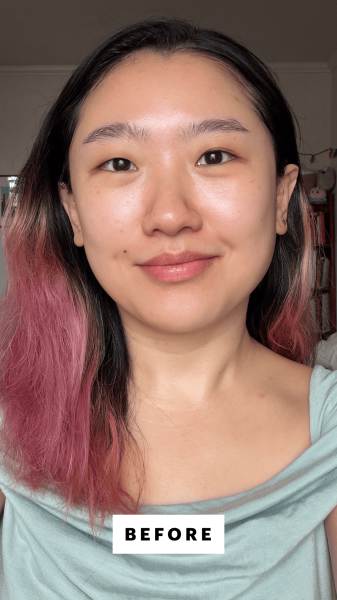
    Han before applying the CeraVe Hydrating Mineral Sunscreen Deep Sheer Tint

    Han before applying the CeraVe Hydrating Mineral Sunscreen Deep Sheer Tint

    Sarah HanHan after applying the CeraVe Hydrating Mineral Sunscreen Deep Sheer Tint
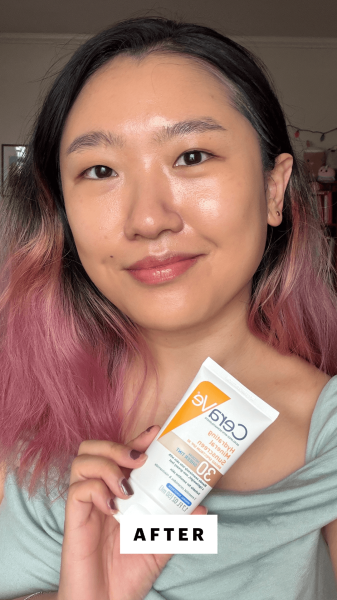
    Han after applying the CeraVe Hydrating Mineral Sunscreen Deep Sheer Tint

    Sarah Han

    Tester feedback from commerce editor Sarah Han

    AccordionItemContainerButtonLargeChevron

    “I'll be real: I've been sleeping on drugstore sunscreens in favor of Korean sunscreens—which, to be fair, are just as affordable! So, when I got this CeraVe mineral tinted SPF from a goodie bag at the Skin Cancer Foundation Gala (I know, fancy!), I decided to give it a shot and was surprised at how elegant the formula is! I use the Medium shade, which gives my skin a healthy, sun-kissed-esque look that I'm into! (Light could potentially work, but I'm afraid it would make me look paler than normal, which I hate.) The finish is quite dewy (another surprise!) but I find that the glowiness calms down a bit after some time. All in all, I'm very impressed for a mineral formula! I've definitely been reaching for this on no-makeup makeup days or using it as a skin tint sub if I am going for a face of makeup.” —Sarah Han, commerce editor

    More to know

    AccordionItemContainerButtonLargeChevron

    • Sunscreen type: mineral
    • Key ingredients: titanium dioxide (5.5%), zinc oxide (10%), hyaluronic acid, niacinamide
    • Who it's for: all skin types
    • Shades: 3
    • Fragrance-free: yes

    Best for Dry Skin: Saie Slip Tint Tinted Moisturizer SPF 35
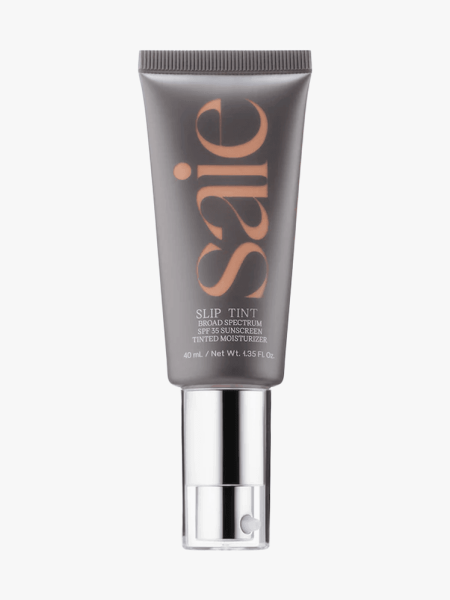
    Saie Slip Tint Tinted Moisturizer SPF 35 in branded component on a light gray backgroundSave to wishlistSave to wishlist

    Saie

    Slip Tint Tinted Moisturizer SPF 35

    $38

    Amazon

    $36

    Sephora

    Allure senior art director Ingrid Fowler applying the Saie Slip Tint Tinted Moisturizer SPF 35

    Ingrid Fowler

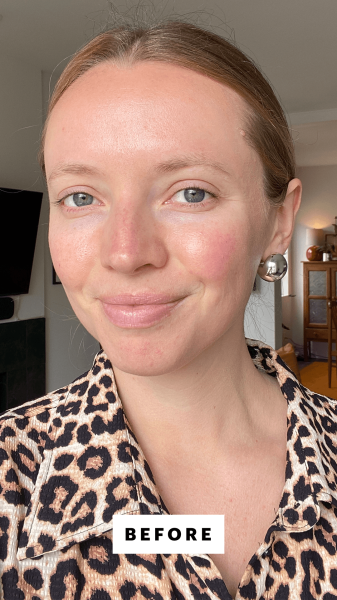
    Why we love it: We appreciate that Saie developed an extensive shade range for the Slip Tint Tinted Moisturizer SPF 35. It’s not as large as your usual foundation range, but the 14 flexible, buildable tints rely on 15% non-nano zinc oxide to deliver gentle, broad-spectrum UV protection without irritating reactive or sensitive skin. It goes beyond standard sun protection with a rich mix of hydrating hyaluronic acid, tone-evening licorice root, soothing pansy flower extract, and moisture-locking squalane. The lightweight formula melts into the skin to deliver a glowy finish.
    Fowler before applying the Saie Slip Tint Tinted Moisturizer SPF 35

    Fowler before applying the Saie Slip Tint Tinted Moisturizer SPF 35

    Ingrid FowlerFowler after applying the Saie Slip Tint Tinted Moisturizer SPF 35
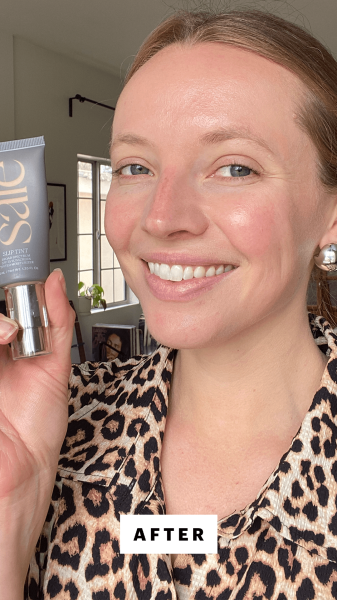
    Fowler after applying the Saie Slip Tint Tinted Moisturizer SPF 35

    Ingrid Fowler

    Tester feedback from senior art director Ingrid Fowler

    AccordionItemContainerButtonLargeChevron

    “I'm a big fan of the Saie Slip Tint Tinted Moisturizer in shade 2. I have quite pink undertones, and this light peachy shade matches me so well. I love how hydrating it is without being greasy, which I often experience with other daily SPFs. It's a great option if you prefer very light coverage.” –Ingrid Fowler, senior art director

    More to know

    AccordionItemContainerButtonLargeChevron

    • Sunscreen type: mineral
    • Key ingredients: zinc oxide (15%), hyaluronic acid, licorice root extract
    • Who it's for: all skin types, including sensitive
    • Shades: 14
    • Fragrance-free: yes

    Best for Mature Skin: Isdin Eryfotona Ageless Tinted Mineral Sunscreen
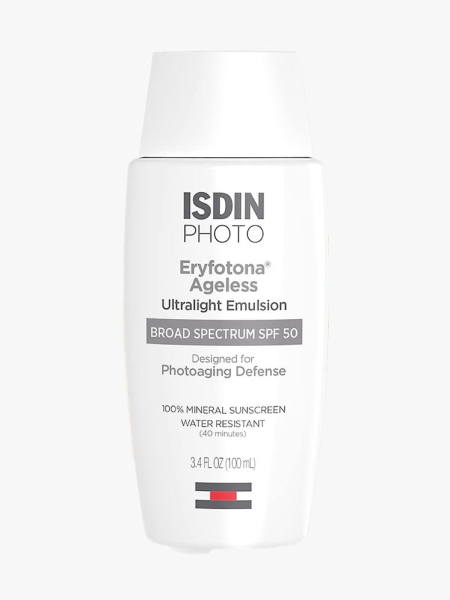
    Isdin Eryfotona Ageless Tinted Mineral Sunscreen curved white bottle on light gray backgroundSave to wishlistSave to wishlist

    Isdin

    Eryfotona Ageless Tinted Mineral Sunscreen

    $78

    Amazon

    $78

    Dermstore

    $78

    Sephora

    Allure contributing commerce editor Deanna Pai applying the Isdin Eryfotona Ageless Tinted Mineral Sunscreen

    Deanna Pai

    Why we love it: The beauty of Isdin’s Eryfotona Ageless Tinted Mineral Sunscreen is that it's crafted to prevent photoaging, also known as signs of aging that UV rays can leave behind, like sun spots and wrinkles. Its line-reducing abilities are mainly due to photolyase enzymes, which "improve DNA damage after exposure to UV light, Kavita Mariwalla, MD, a New York-based board-certified dermatologist, says. Along with this key ingredient, Isdin’s mineral-based SPF is enriched with firming peptides and tone-evening antioxidants that prevent UV damage and improve the look of hyperpigmentation and fine lines. Though its tint comes out beige, its formula quickly blends into your skin as you massage it in. We’ve found that it doesn’t offer a ton of coverage—so don’t expect it to double as a skin tint—but it goes on practically invisible, leaving no trace that it was ever there. The dropper applicator also makes it easy to dispense just the right amount.
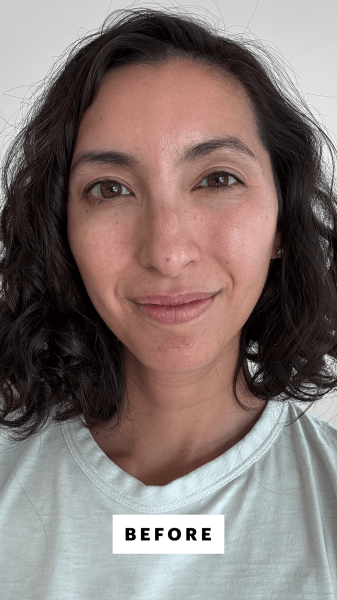
    Pai before applying the Isdin Eryfotona Ageless Tinted Mineral Sunscreen

    Pai before applying the Isdin Eryfotona Ageless Tinted Mineral Sunscreen

    Deanna PaiPai after applying the Isdin Eryfotona Ageless Tinted Mineral Sunscreen
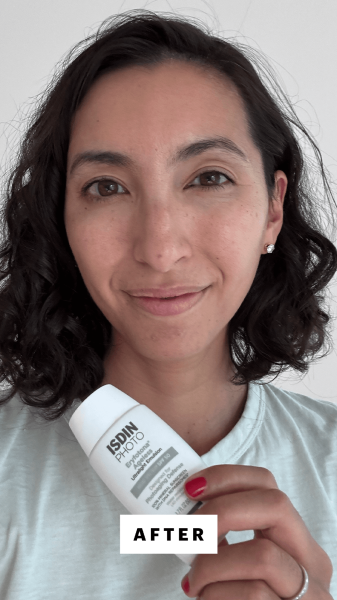
    Pai after applying the Isdin Eryfotona Ageless Tinted Mineral Sunscreen

    Deanna Pai

    Tester feedback from contributing commerce editor Deanna Pai

    AccordionItemContainerButtonLargeChevron

    “My mineral sunscreens have to be tinted—I have too much pigment in my skin to deal with the chalkiness. My skin is a medium olive with neutral undertones. I love that this pulls double-duty to not only protect my skin from sun damage but also actively works to even out my skin tone. That’s a big deal since I, like most people with deeper skin, am very prone to dark spots. Plus, it smells and feels like nothing.” –Deanna Pai, contributing commerce editor

    More to know

    AccordionItemContainerButtonLargeChevron

    • Sunscreen type: mineral
    • Key ingredients: zinc oxide (10.7%), peptides, plankton extract, photolyase enzymes
    • Who it's for: maturing skin, sensitive skin
    • Shades: 1
    • Fragrance-free: yes

    Best SPF Serum: Ilia Super Serum Skin Tint SPF 40
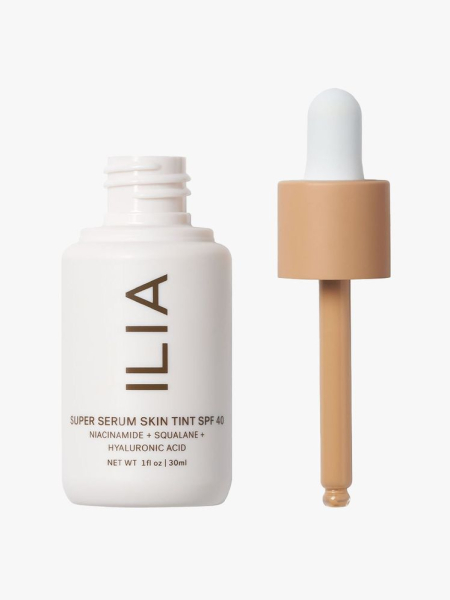
    Ilia Super Serum Skin Tint SPF 40 white serum bottle of skin tint with pale nude and white dropper cap to the side on light gray backgroundSave to wishlistSave to wishlist

    Ilia

    Super Serum Skin Tint SPF 40

    $48

    Amazon

    $48

    Nordstrom

    $48

    Ulta Beauty

    Allure senior news editor Nicola Dall’Asen applying Ilia Super Serum Skin Tint SPF 40

    Nicola Dall’Asen

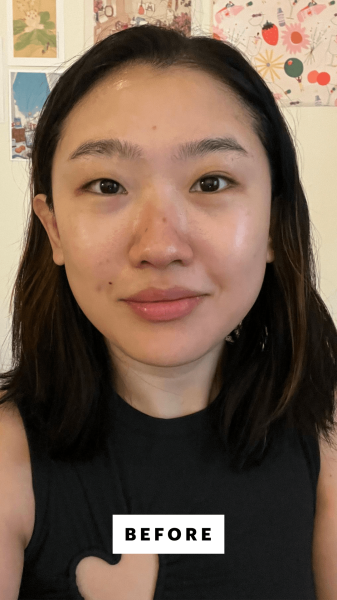
    Why we love it: Ilia's Super Serum Skin Tint SPF 40 gets a lot of love from us for many reasons. In addition to offering light coverage in 30 diverse shades—pretty major for a tinted sunscreen—its nearly weightless serum format makes it truly unique. Although it feels (and looks) like you're wearing nothing, it's actually introducing moisture-boosting, calming ingredients like hyaluronic acid, squalane, and niacinamide into the skin, topped off with mineral sun filters. Don't panic if it looks a little pale at first application: The mineral zinc warms up and melts into your true shade within 60 seconds, leaving a dewy finish.
    DallAsen before using the Ilia Super Serum Skin Tint SPF 40

    Dall’Asen before using the Ilia Super Serum Skin Tint SPF 40

    Nicola Dall'AsenDallAsen after using the Ilia Super Serum Skin Tint SPF 40
    Dall’Asen after using the Ilia Super Serum Skin Tint SPF 40

    Nicola Dall'Asen

    Tester feedback from former senior news editor Nicola Dall’Asen

    AccordionItemContainerButtonLargeChevron

    “My hands automatically gravitate to this tinted serum when I can't be bothered to do skin care or makeup (a.k.a. very frequently). Putting the word 'serum' in the name wasn't a lie; this stuff oozes, goozes, and slathers just like a thick, somewhat oily serum, and that's exactly what lends itself to a seconds-long, rub-in application and instantly hydrating effect.” –Nicola Dall’Asen, former senior news editor

    More to know

    AccordionItemContainerButtonLargeChevron

    • Sunscreen type: mineral
    • Key ingredients: non-nano zinc oxide (12%), squalane, niacinamide, hyaluronic acid
    • Who it's for: normal and dry skin types
    • Shades: 30
    • Fragrance-free: yes

    Best Shade Range: Tower 28 Beauty SunnyDays Skin Tint with Mineral Zinc SPF 30
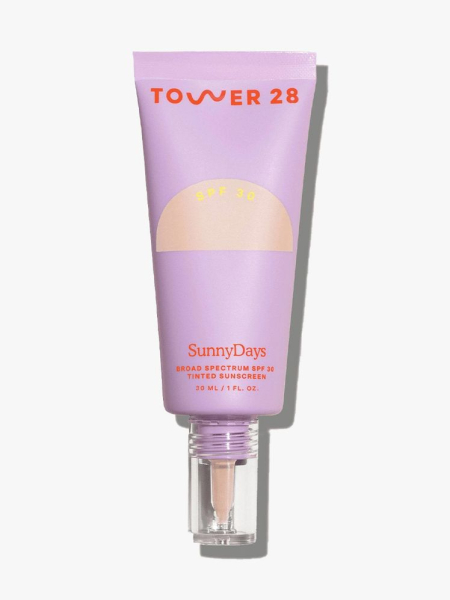
    Tower 28 SunnyDays SPF 30 Tinted Sunscreen Foundation purple tube of tinted sunscreen on light gray backgroundSave to wishlistSave to wishlist

    Tower 28

    SunnyDays SPF 30 Tinted Sunscreen Foundation

    $32

    Amazon

    $32

    Sephora

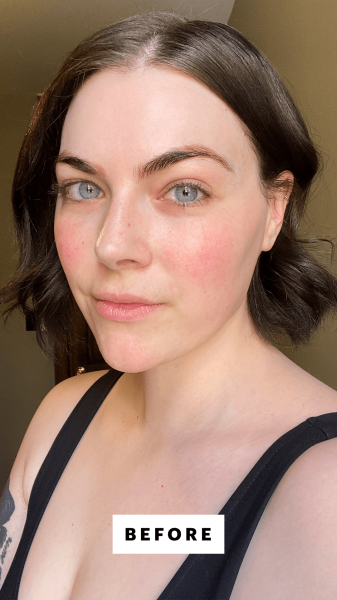
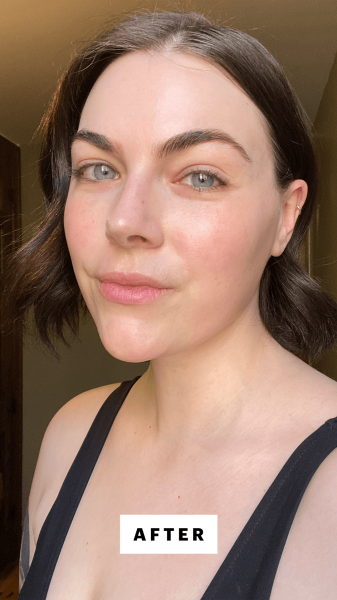
    Han applying the Tower 28 SunnyDays SPF 30 Tinted Sunscreen Foundation

    Sarah Han

    Why we love it: Tower 28's SunnyDays SPF 30 Tinted Sunscreen Foundation is equal parts makeup and skin care. Loved by our editors for its barely-there feel, it also gets a nod of approval from Dr. Spearman, who finds it “especially effective for sensitive skin types or those who prefer minimal, breathable coverage that still evens out redness and tone.” Formulated to melt into the skin like a moisturizer, it offers effortless, finger-friendly application using just your hands. Our team also loves its flexible 17 shades and ability to tone down the look of redness, thanks to an antioxidant-rich blend of white sage and prickly pear extracts. Fun fact: Like most makeup and skin-care products from Tower 28, this formula received the National Eczema Association's Seal of Acceptance for its gentle, irritant-free formulation.
    Han before applying the Tower 28 SunnyDays SPF 30 Tinted Sunscreen Foundation

    Han before applying the Tower 28 SunnyDays SPF 30 Tinted Sunscreen Foundation

    Sarah HanHan after applying the Tower 28 SunnyDays SPF 30 Tinted Sunscreen Foundation
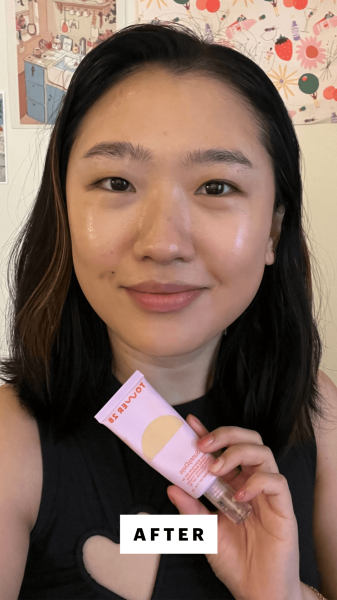
    Han after applying the Tower 28 SunnyDays SPF 30 Tinted Sunscreen Foundation

    Sarah Han

    Tester feedback from Han

    AccordionItemContainerButtonLargeChevron

    “SunnyDays and I go way back—at least, since its launch in 2021. Even as someone who almost always prefers a chemical sunscreen, I’ve found a few mineral SPFs (usually tinted) that pull their weight. SunnyDays blends in and sinks into the skin so naturally and weightlessly that I did a double-take the first time I used it. Even after all these years of consistent use, I have pretty much nothing negative to say about it! I dispense straight from the tube onto my face, give the formula a hearty rub-in with my clean fingers (which does most of the job, so we love!) and, if I have time, use a damp sponge mostly to ensure everything is blended in extra seamlessly. One caveat is that, no matter what tinted sunscreen it may be, I apply a standalone sunscreen prior to the tinted version for maximum protection.” –Sarah Han, commerce editor

    More to know

    AccordionItemContainerButtonLargeChevron

    • Sunscreen type: mineral
    • Key ingredients: zinc oxide (13.58%), homosalate (7%), octisalate (5%), hyaluronic acid
    • Who it's for: all skin types, including sensitive
    • Shades: 17
    • Fragrance-free: yes

    Best for Oily Skin: Supergoop Mineral Mattescreen SPF 40
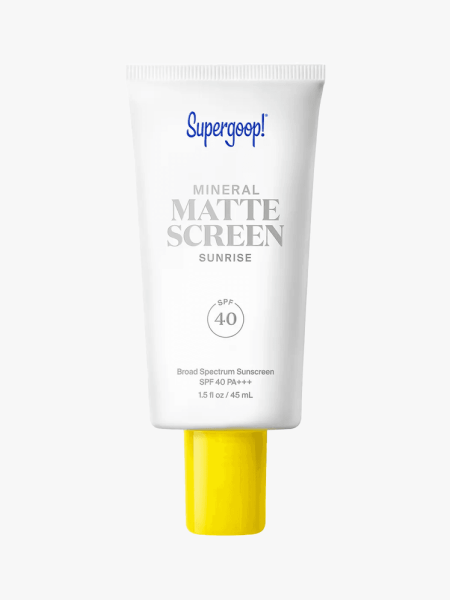
    Supergoop! Mineral Mattescreen SPF 40 in branded tube component on a light gray backgroundSave to wishlistSave to wishlist

    Supergoop

    Mineral Mattescreen SPF 40

    $40 $32 (20% off)

    Amazon

    $40

    Nordstrom

    $40

    Ulta Beauty

    Allure managing editor Alessandra Foresto applying the Supergoop! Mineral Mattescreen SPF 40

    Alessandra Foresto

    Why we love it: Supergoop made its name in the sun protection space, and its Mineral Mattescreen has won many of the chemical formulas BOB/RCA but don't overlook this mineral formula. Zinc oxide and titanium dioxide handle broad-spectrum protection here, but the real appeal for oily and combination skin is the mousse-like texture, built with skin-conditioning polymers that blur the look of pores and control shine for up to 12 hours. Doubling as a smooth makeup primer, it uses four sheer shades (Translucent, Sunrise, Golden Hour, and Sunset) to completely neutralize the white cast typical of mineral formulas.
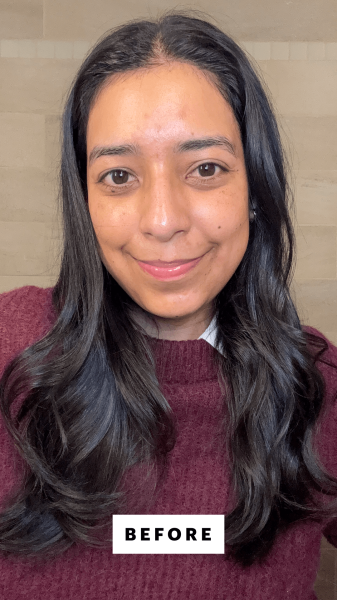
    Foresto before applying the Supergoop Mineral Mattescreen SPF 40

    Foresto before applying the Supergoop! Mineral Mattescreen SPF 40

    Alessandra ForestoForesto after applying the Supergoop Mineral Mattescreen SPF 40
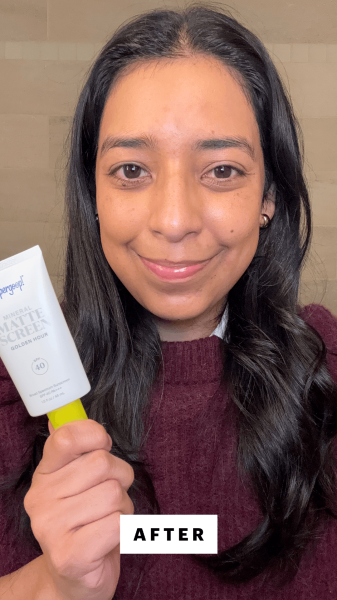
    Foresto after applying the Supergoop! Mineral Mattescreen SPF 40

    Alessandra Foresto

    Tester feedback from managing editor Alessandra Foresto

    AccordionItemContainerButtonLargeChevron

    “I've been a fan of this tinted matte mineral sunscreen from Supergoop since it only came in one universal shade. I'm even more of a fan now that they have extended their range to better match my skin tone. (I use shade Golden Hour.) I love wearing it on its own when I need a little coverage on my dark spots on a summer day when I don't feel like wearing a full face of makeup. But it's also by far the best sunscreen to use under makeup because it functions as a smoothing and grippy primer that makes my foundation, concealer, or skin tint (whatever I feel like that day) go on more evenly and stay on for longer.

    It's lightweight, and in my experience it doesn't travel into eyes even if you go into water. Because it's tinted, there's no white cast left behind by the mineral SPF at all, and unlike other tinted mineral SPF I've tried, there's no patchy application either.“ —Alessandra Foresto, managing editor

    More to know

    AccordionItemContainerButtonLargeChevron

    • Sunscreen type: mineral
    • Key ingredients: non-nano zinc oxide (17.42%), titanium dioxide (1.33%), wild ginger root extract
    • Who it's for: normal and oily skin types
    • Shades: 4
    • Fragrance-free: yes

    Best for Sensitive Skin: La Roche-Posay Anthelios Sunscreen SPF 50
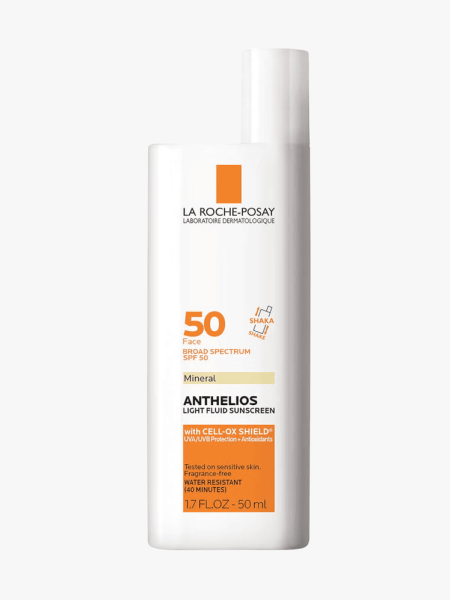
    La Roche-Posay Anthelios Ultra-Light Mineral Sunscreen SPF 50 in branded white component with orange accents on a light gray backgroundSave to wishlistSave to wishlist

    La Roche-Posay

    Anthelios Sunscreen SPF 50

    $40

    Amazon

    $40

    Ulta Beauty

    Why we love it: “Dependable protection with a very natural, skin-enhancing finish" is how Dr. Spearman describes La Roche-Posay’s Anthelios 50 Mineral Tinted Ultra Light Sunscreen Fluid, a 2023 Allure Best of Beauty Award winner. The 100% mineral formula is built around titanium dioxide and paired with the brand's proprietary Cell-Ox Shield antioxidant complex, which helps defend against free-radical damage. Dr. Spearman finds it particularly effective for "individuals with uneven tone or mild discoloration," in part because the texture "layers smoothly and does not feel heavy or occlusive." The fragrance-free tint is also formulated and tested specifically for sensitive skin, so anyone can use it with confidence.

    Brianna Olamiju, MD, a board-certified dermatologist based in New York City, reaches for the line's SPF 40 version just as often, which is also available in four subtle, blendable shades. The two formulas overlap in nearly every way that matters. The difference comes down to the mineral filter itself: SPF 50 relies on titanium dioxide alone, which skews stronger against UVB and shorter-wave UVA rays, while SPF 40 pairs titanium dioxide with zinc oxide, a combination that extends coverage further into the longer UVA1 wavelengths (that penetrate more deeply into the dermis than UVA) tied to wrinkles, skin elasticity, and pigmentation.

    More to know

    AccordionItemContainerButtonLargeChevron

    • Sunscreen type: mineral
    • Key ingredients: titanium dioxide (11%), Cell-Ox Shield antioxidant complex (vitamin C, vitamin E, Cassia Alata/Senna leaf extract), iron oxides
    • Who it's for: all skin types, including sensitive
    • Shades: 4
    • Fragrance-free: yes

    Best for Redness: Versed Skin Solution Multi-Serum Skin Tint SPF 40
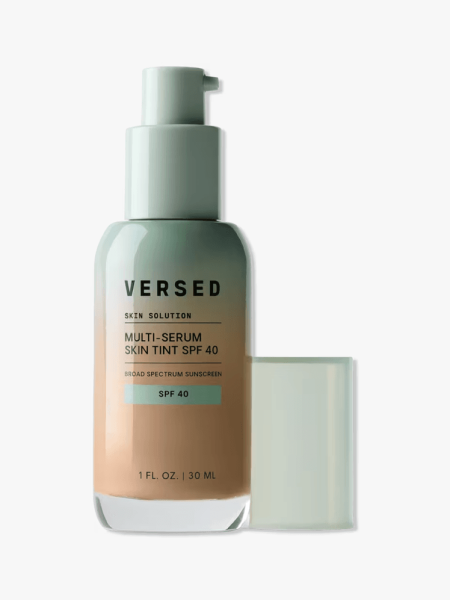
    Versed Skin Solution Multi-Serum Skin Tint SPF 40 in branded component on a light gray backgroundSave to wishlistSave to wishlist

    Versed

    Skin Solution Multi-Serum Skin Tint SPF 40

    $20

    Ulta Beauty

    $20

    Revolve

    Why we love it: If facial flushing or flare-upsare a common occurrence, Versed’s Skin Solution Multi-Serum Skin Tint SPF 40 belongs on your radar. It's been accepted by the National Rosacea Association, a signal that the formula has been thoroughly vetted as gentle enough for reactive skin. Non-nano zinc oxide provides broad-spectrum protection, while hyaluronic acid hydrates and kakadu plum extract helps brighten your overall complexion. It comes in 14 shades spanning cool, neutral, and warm undertones, with light-to-medium buildable coverage and a dewy finish that blends effortlessly into skin.

    Tester feedback from Taylor

    AccordionItemContainerButtonLargeChevron

    “I use Versed’s Skin Solution Multi-Serum Skin Tint to wake up my morning skin. My face tends to look a bit flushed when I first wake up, and this formula instantly evens out my complexion (both redness and hyperpigmentation). It's my morning signal that I'm starting my day when I don't feel like doing a full face. Best of all, despite its hydrating dewy finish, it has never clogged my pores or caused breakouts–it goes on virtually weightless.” –Jailynn Taylor, contributor

    More to know

    AccordionItemContainerButtonLargeChevron

    • Sunscreen type: mineral
    • Key ingredients: non-nano zinc oxide (13.1%), hyaluronic acid, kakadu plum extract
    • Who it's for: all skin types, including rosacea
    • Shades: 14
    • Fragrance-free: yes

    Frequently Asked Questions

    What is the appeal of tinted sunscreen over a regular sunscreen?

    Tinted sunscreen contains iron oxides, pigments that give it its tint, and it helps shield skin from visible light (visible sunlight and blue light), something regular sunscreen doesn't do. "This is important because visible light can worsen conditions like melasma and post-inflammatory hyperpigmentation," explains Dr. Olamiju. It also solves a common complaint with traditional mineral formulas: Dr.Olamiju notes that tinted sunscreen "minimizes white cast" while camouflaging discoloration already on the skin. Beyond that extra shield, Dr. Spearman points to the practical payoff: “Tinted sunscreens appeal to many patients because they combine daily UV protection with an immediate cosmetic benefit, which makes consistent wear much easier.”

    What's the difference between mineral, chemical, and hybrid tinted sunscreens?

    The three formulas differ mainly in how they interact with UV rays. "Mineral tinted sunscreens rely on zinc oxide or titanium dioxide to physically block and reflect UV rays, and they tend to be better tolerated by sensitive or reactive skin types," says Dr. Spearman. Chemical formulas work the opposite way, absorbing UV radiation and converting it into heat for a lighter, more invisible finish, though Dr.Olamiju warns they can occasionally sting the eyes if the product drips. Hybrid sunscreens split the difference: Per Dr. Spearman, they "combine both approaches to balance comfort and protection."

    Meet the experts

    • Kavita Mariwalla, MD, a board-certified dermatologist based in West Islip, New York
    • Dara Spearman, MD, a board-certified dermatologist based in Fort Wayne, Indiana
    • Brianna Olamiju, MD, a board-certified dermatologist based in New York City

    How we test and review products

    When Allure tests a product, our editors look at it from every angle in an effort to best serve you. We review ingredients, scrutinize brand claims, and, when necessary, examine peer-reviewed scientific and medical studies. In addition to testing every product that’s included in the review, we rely on experts who shape their fields, including dermatology, cosmetic chemistry, and medicine, to help us vet the ingredients and formulas.

    For our list of the best tinted sunscreens, we considered each product’s performance across five primary categories: product ingredients and efficacy, packaging, fragrance, texture, and product wear. Every product was determined to have excelled in each category by our editorial team, which is composed of in-house writers and editors as well as contributors — along with special consideration from dermatologists. To learn more information on our reporting and testing processes, read our complete reviews process and methodology page.

    Our staff and testers

    A beauty product is a personal purchase. You might be searching for a face cream to address persistent dryness or a new nail product to add to your Sunday self-care routine; you may simply be browsing around for the latest launches to hit the hair market. No matter what you seek or your individual needs and concerns, Allure wants to ensure that you love anything we recommend in our stories. We believe that having a diverse team of writers and editors — in addition to the wide range of outside testers and industry experts we regularly call upon — is essential to reaching that goal.

    After all, can we really say a skin-care product is the “best” for people over 50 if the only testers we’ve solicited opinions from folks who have yet to hit 30? Can we honestly deem a high-end diffuser worthy of your hard-earned cash if it’s never been tested on curls? We’re proud that our staff spans a wide range of ages, skin tones, hair textures, genders, and backgrounds, which means that we are able to fairly assess any beauty product that comes into the beauty closet.

  • The Crown Braid Is Back: Here’s How to Get to the 2026 Version

    The Crown Braid Is Back: Here’s How to Get to the 2026 Version

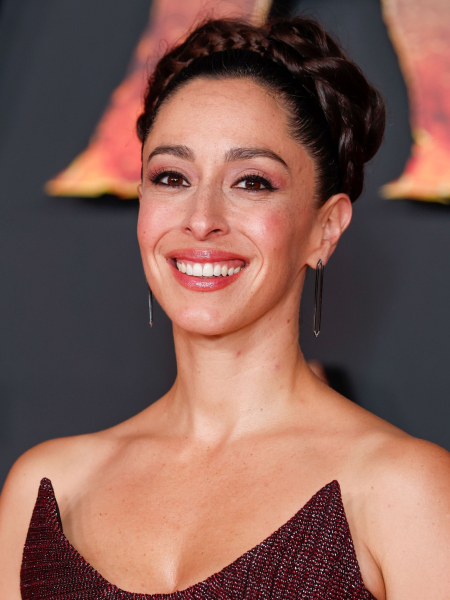
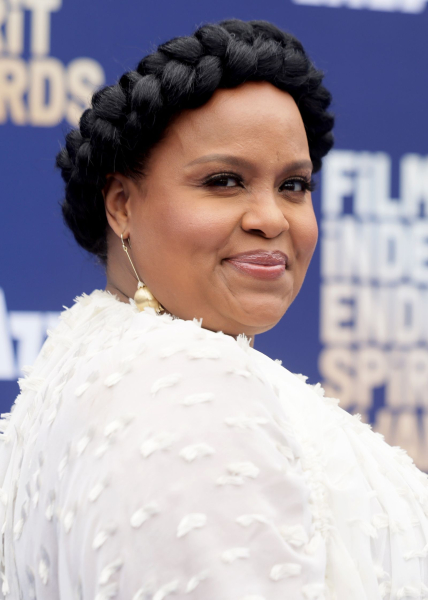
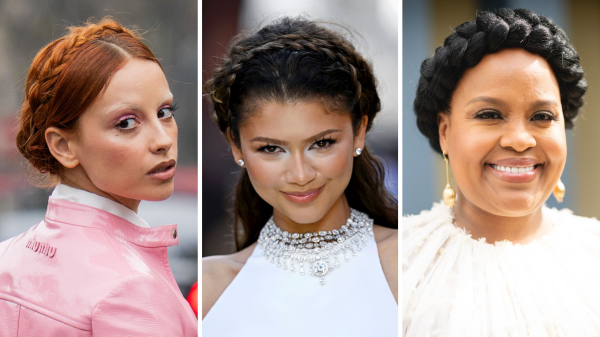
    Marie Gaguech Zendaya and Natasha Rothwell wearing crown braidsPhotos: Getty ImagesSave StorySave this storySave StorySave this story

    It's been nearly a decade since the crown braid’s last reign, when Pinterest boards were overflowing with milkmaid vibes, flower crowns, and a burgeoning festival-fashion culture. Then, seemingly overnight, they seemingly unraveled, replaced by slicked buns and retro headbands; even beehives have been making more appearances than crown braids in the 2020s.

    But over the last year, something has shifted. Crown braids have been building momentum once again, showing up on red carpets and in street-style shots, taking on both classic and reimagined shapes. The revival came to a head (pun intended) when, in early July, Zendaya wore not one but two modern takes on the style—both by hairstylist Coree Moreno—while promoting The Odyssey. And if that didn’t declare the crown-braid comeback clearly enough, Olivia Rodrigo reinforced the message with her own crown braid at Lollapalooza, styled with casual glossiness by Owen Gould.

    Zendaya wearing a half up crown braidZendayaPhoto: Getty ImagesZendaya wearing a crown braidZendayaPhoto: Getty Images

    "Crown braids are coming back because we're seeing a shift away from overly polished, high-maintenance styles toward looks that feel romantic, effortless, and a little nostalgic," says Aaron Grenia, hairstylist and cofounder of IGK Hair Care. "What makes it feel fresh this time is the styling."

    Instead of the flawlessly woven, symmetrical "milkmaid braid" that dominated the last wave, today's crown braid leans more into natural texture, face-framing pieces, and a lived-in finish, allowing it to pair well with everything from Rodrigo’s vintage Smashing Pumpkins tee to Zendaya’s Schiaparelli couture. You could say the crown braid is having a renaissance without leaning too Renaissance Faire.

    Instagram content

    Despite the shift, there is something inherently whimsical about the style, but the 2026 version feels less costume-y. "We're seeing so many softer, more romantic hairstyles come back right now," says Los Angeles-based hairstylist Hayley Heckmann. "Crown braids have a pretty, feminine feel, but the way they're being worn now feels more effortless and cool." She notes that seeing the style on celebrities who don't typically lean into overtly bohemian beauty instantly makes it feel fresh again.

    If you're inspired to recreate the look, the good news is that you don't need to be an expert braider—you just need a little texture.

    Marie Gaguech wearing a crown braid and a pink jacketMarie GaguechPhoto: Getty ImagesOona Castilla Chaplin wearing a crown braidOona ChaplinPhoto: Getty Images

    "The biggest mistake people make is trying to braid freshly washed, silky hair," says Grenia. Hair with a bit of grip is much easier to work with, so he recommends prepping with a texturizing spray or dry shampoo, like IGK Beach Club Touchable Texture Spray or Not Your Mother’s Beach Babe Texturizing Dry Shampoo, before creating two low braids behind each ear. After securing them with clear elastics, gently "pancake" the braids, i.e. carefully pull them apart to make them look fuller. Wrap each one across the crown of your head, pinning everything into place. Finish with a flexible hairspray like Tresemmé Workable Hairspray or JVN FlexHold Strengthening Hairspray, then loosen a few pieces around the face for movement.

    Heckmann prefers creating a Dutch braid that wraps around the head rather than pinning two separate braids together, but her philosophy is exactly the same: Pull the braid apart slightly, embrace a little imperfection, and resist the temptation to smooth every flyaway into submission. "You don't want it to feel too perfect or tight," she says. "Even a little volume or imperfection makes it feel cooler and more modern."

    Natasha Rothwell wearing a crown braidNatasha RothwellPhoto: Getty Images

    Los Angeles-based hairstylist Sunnie Brook takes yet another approach that involves sectioning and separating hair just behind the ear to create four braids. (Yes, you guessed it: Pancake the plaits for more fullness.) Criss-cross the tied-off front braids across the top of your head and bobby-pin them down; criss-cross the back braids so they follow the scooped shape of your hairline before pinning them down as well, creating a full-circle illusion.

    A few simple tweaks can make the crown braid work for virtually every hair type. Brook recommends weaving a ribbon or scarf into each braid if your hair is short or heavily layered, creating the illusion of fuller, longer braids while helping shorter pieces stay put. Those with fine hair can make their braids appear almost twice as thick by gently pinching and pulling each section apart before pinning it into place.

    Meanwhile, thick or very long hair may not need extra texture at all. Brook actually recommends skipping volumizing sprays—which can make dense hair feel bulky—and instead smoothing a lightweight oil like Biolage All-In-One Multi-Benefit Oil through the lengths for shine and frizz control. If flyaways tend to pop up while braiding, she likes working a small amount of Rōz Styling Cream through each section as you go. And for anyone worried about the style looking severe, her favorite trick is surprisingly simple: Leave about an inch of hair around the hairline out at first, then tuck those pieces into the braid at the very end for a softer, less pulled-back finish.

  • Does GLP-1 Drug Tirzepatide Trigger Hair Loss? Experts Weigh In.

    Does GLP-1 Drug Tirzepatide Trigger Hair Loss? Experts Weigh In.

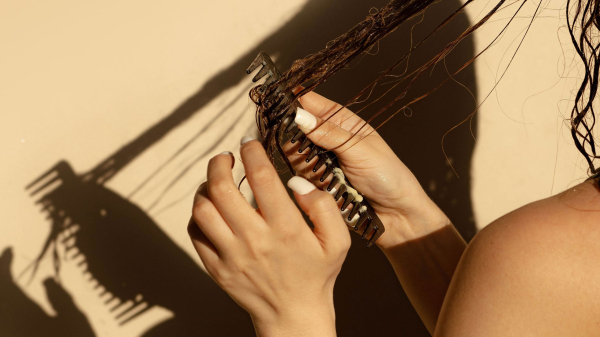
    Woman moving comb through wet hairSome GLP-1 drugs may be causing more hair loss than others.Adobe StockSave StorySave this storySave StorySave this story

    Hair loss can be sparked by everything from your genetics to your stress levels, making it hard at times to pinpoint what’s fueling the shedding. But new research suggests that, if you’re suddenly losing hair, you might want to take a closer look at your GLP-1.

    The study, which hasn’t been published in a medical journal yet, found that the risk of developing hair loss was "significantly greater” when people started using tirzepatide (Zepbound, Mounjaro) over fellow GLP-1 medication semaglutide (Wegovy, Ozempic).

    If you’re taking tirzepatide, don’t panic just yet. Doctors say there could be a few reasons for the link—and it doesn’t mean you’ll lose your hair if you’re on this GLP-1.

    The study followed GLP-1 users for a year.

    For the study, researchers analyzed data over 12 months from 12,863 people who took semaglutide and 12,863 people who took tirzepatide. None of the participants had a documented history of alopecia (the medical term for hair loss).

    The researchers discovered that people who took tirzepatide were more likely to develop hair loss during the study period compared to those who took semaglutide. While the numbers were small overall—4.2% vs. 2.88%—there was a clear difference.

    Because people tend to lose more weight on tirzepatide, the researchers also matched tirzepatide and semaglutide users based on how much weight they lost. The data still showed that people on tirzepatide were more likely to develop hair loss than those who took semaglutide—4.24% vs. 3.33%—when they lost the same amount of weight.

    The difference was noticeable by six months, when 1.55% of tirzepatide users developed hair loss compared to 1.24% of semaglutide users. But the gap really widened after a year.

    Women were especially vulnerable to hair loss on these medications: Nearly 5.5% of tirzepatide users and 3.6% of semaglutide users dealt with alopecia during the study.

    “Both tirzepatide and semaglutide have been associated with alopecia during weight reduction, but it remained unknown whether this was simply a consequence of losing weight or whether the risk might differ between the two therapies,” says Venky Soundararajan, PhD, study co-author and chief scientific officer at Nference. “In our study, hair loss was uncommon overall, but it was a real signal and should not be brushed aside.”

    It’s important to point this out: The study was observational, so it can’t prove that taking tirzepatide or semaglutide caused the hair loss. (It's also worth noting that, by some estimates, roughly 50% of women will deal with hair loss in their lifetimes anyways). Instead, it just found a link.

    This isn’t the only recent study to link GLP-1s with hair loss.

    Research published in late July in The BMJ stacked data from people who used GLP-1s to manage type 2 diabetes against patients who took other popular medications for the condition. The researchers found that GLP-1 users had a 37% higher risk of being diagnosed with alopecia compared to those who took type 2 diabetes medications SGLT-2 inhibitors (like Jardiance and Farxiga) and a 68% higher risk of hair loss than people on DPP-4 medications (such as Januvia and Tradjenta).

    A different study published in June analyzed data from nearly 2.4 million GLP-1 users and found that people on semaglutide had a higher risk compared to those on diabetes medication metformin of developing androgenetic alopecia—a common type of hormone-driven hair loss—while those who took tirzepatide had a “borderline association” with developing telogen effluvium, a type of temporary hair loss that’s usually caused by a physical or emotional shock.

    This part isn't shocking to dermatologists. “We know that rapid weight loss, whether it is from diet and exercise or from medication, may be associated with hair loss,” says Joshua Zeichner, MD, director of Cosmetic and Clinical Research in the Department of Dermatology at The Mount Sinai Hospital.

    There are probably a few things going on here.

    Again, weight loss is linked to hair loss, especially when it’s fast or dramatic, says Susan Massick, MD, a board-certified dermatologist at The Ohio State University Wexner Medical Center. GLP-1s are known for helping people to lose weight quickly, which can explain why some patients on tirzepatide and semaglutide were faced with hair loss.

    But tirzepatide and semaglutide work a little differently in the body, which could explain the gap in how many patients ended up with hair loss on the medications. Semaglutide acts on one receptor in the body, called glucagon-like peptide-1 (or GLP-1), while tirzepatide works on GLP-1 and another receptor called glucose-dependent insulinotropic polypeptide (GIP), Dr. Zeichner points out.

    “Since the tirzepatide affects more than one receptor, it may have a greater impact on the body than just weight loss,” he says. “GIP receptors have been identified in the hair follicles and, as the drug binds to these receptors, it may have an effect on the microenvironment surrounding the hair follicles, impacting their activity.” Cue the hair loss—in some people.

    Women on tirzepatide who experienced hair loss were also more likely to have irregular periods, hypothyroidism (an under-active thyroid), and polycystic ovary syndrome (PCOS) than those who didn’t have hair loss. “These are associations, not proof that any of these conditions cause medication-associated hair loss, but they suggest that underlying hormonal or autoimmune susceptibility may matter alongside weight loss for women using tirzepatide,” Soundararajan says.

    Dr. Massick also stresses that the data doesn’t tell the whole story. “This [new] study does not truly capture other confounding factors such as lifestyle, dietary intake, and other underlying medical conditions,” she says. Meaning, there could be something going on with people who are more likely to use tirzepatide that raises the risk of hair loss—and it may have nothing to do with the medication itself.

    What’s the takeaway?

    More research is needed to figure out what could be fueling more hair loss in people who take tirzepatide, ​​Soundararajan says. But that’s not helpful if you’re dealing with hair loss right now.

    Hair loss is complicated, making it important to rope in a dermatologist, Dr. Zeichner says. If you haven’t started a GLP-1 yet but are planning to, he suggests touching base with your dermatologist to be proactive and talk about how to maintain your skin and hair health during your weight loss journey.

    If you happen to deal with hair loss, your dermatologist will likely recommend treatments like minoxidil, finasteride, vitamin supplements, red light therapy, or platelet-rich plasma (PRP), Dr. Zeichner says.

    But Dr. Massick says you may need to have a little patience with your hair while you're on a GLP-1. “If your hair loss is related to telogen effluvium, you will not go bald or lose all your hair, and your hair will likely grow back once your weight stabilizes,” she says.

    While you ride things out, Dr. Massick also recommends doing what you can to make sure you’re getting in enough calories, along with eating a varied diet. But if you’re dealing with hair shedding and it doesn’t seem to be improving, she suggests checking in with your doctor to make sure something else isn’t going on, like a vitamin deficiency or thyroid disease.

    It's easy to feel alone in a hair loss journey, but dermatologists stress that you’re not the only one dealing with this. GLP-1 use has caused side effects that have impacted dermatology and plastic surgery. As Dr. Zeichner says: “Hair thinning has become an expected side effect in patients, especially women, on GLP-1 drugs.”

  • How AI-Generated Images Are Changing Beauty Consultations

    Play/Pause ButtonPauseAnimation by Mark Baker-Sanchez/Allure; Photo: Adobe StockSave StorySave this storySave StorySave this story

    Poreless skin with a preternatural glow. Blonde highlights blended so well you can no longer see the individual strands. A nose that’s never even heard of a crook. A hand with individual, intricate tattoo “sleeves” on each finger. Manicures with textures and designs so complex they’d be impossible to recreate. Artificial intelligence has come for the beauty industry, and it seems many clients can’t resist the generative chatbots’ siren song. Experts across fields report a sharp increase in the number of AI-generated images their patients and clients are bringing as inspiration for the service they want provided.

    “[Bringing AI-generated images] has become a normal part of the consultation,” says Melissa Doft, MD, a board-certified plastic surgeon based in New York. July, a Leicester, England-based tattoo artist who goes by @inkedbyjuls, says “Nearly 30% of my clients have reached out to me with AI-generated images as a reference for their tattoo ideas in recent months.” While some practitioners are OK with using these as a jumping off point—and understand that some clients who struggle with verbally explaining their vision might find chatbots helpful for translating that idea into an image—everyone we spoke to for this piece agrees that these artificially-generated visuals are largely just setting people up for disappointment.

    Many experts interviewed for this story acknowledged that their clients or patients may not even realize they’ve brought something AI-generated, since the online places where people typically get inspiration have become flooded with slop of varying quality. “When I clock the AI, I’m super upfront with them about a realistic result,” Anna Miles, a nail artist based in New York City, says, echoing the general consensus among these pros.

    Here, a brief look into how AI-generated images are changing the consultation process across the beauty industry—and where these experts wish you would get your inspiration from instead.

    For Plastic Surgery

    Plastic surgeons have long cautioned patients against bringing in photos of celebrities as inspiration for their own rhinoplasty/breast implants/tummy tuck. That famous person’s face (or boobs or butt) is not your face, and no amount of amazing (and expensive) surgery will make you look like them.

    “Patients arrive having already generated a version of themselves through a beauty app or ChatGPT. They say, ‘This. Make me look like this.’”

    So, technically, you could say patients are more closely following doctors’ orders these days. “Years ago, I was the one holding the pencil, sketching a new profile onto a photo of your nose while you watched,” Dr. Doft says. Now, “patients arrive having already generated a version of themselves through a beauty app or ChatGPT, and they hand me the picture and say, ‘This. Make me look like this.’” She notes that some people even come in with a full, AI-generated medical plan, including the procedures they think they need and after-care instructions.

    AI is a viable tool for research, but the humans actually performing plastic surgeries know the most about these procedures. “AI generated photos do not take into account anatomic constraints on potential surgical results such as skin thickness, skeletal anatomy for the face and underlying cartilage shape and strength for rhinoplasty,” Dr. Steven Pearlman, MD, a dual board-certified facial and reconstructive plastic surgeon in New York City. “AI does not understand what can and cannot realistically be accomplished in facial plastic surgery.”

    “AI does not understand what can and cannot realistically be accomplished in facial plastic surgery.”

    There’s also the issue that these generative AI-models are trained to view a very specific type of beauty as ideal. “A generated face optimizes for one thing: so-called ideal proportions [like] wide-set eyes, a small straight nose with a delicate tip, full lips, high cheekbones, and perfect symmetry,” Dr. Doft says. “Plenty of patients love the nose they inherited from their father or the eyes that run in their family, and a generated photo erases all of that in favor of a sameness I see over and over. You lose the individual.”

    Both Dr. Doft and Dr. Pearlman agree that patients should seek out a qualified, experienced surgeon who can create an individualized plan. Dr. Pearlman says he does use computer imaging to show rhinoplasty and revision rhinoplasty patients their potential results, but only after carefully examining the patient to see what could actually be achieved.

    As far as computer-free inspiration photos go, Dr. Doft recommends patients bring in older photos of themselves or “images of real people whose features feel authentic to them,” saying, “These give me far more to work with than a filtered ideal.”

    For Manicures

    Although Miles prefers drafting nail art looks with a pen and paper, she understands why clients might turn to generative AI. “AI can be helpful for the client if they can’t explain their concept in full,” she says. She even admits that these programs can occasionally come up with something cool. “Sometimes the computer hits shuffle and makes some valid points, like throwing digital spaghetti at a proverbial wall,” Miles says. “But my imagination is usually better than the logarithmic output.”

    “I was relieved they were still hiring an artist to create the work, even though they used AI as a tool to mock it up.”

    Sigourney Nuñez, a nail artist based in Los Angeles, recalls one time a brand she was working with presented her with a project brief “just covered with AI-generated photos.” She says it took her by surprise, but ultimately, “I was relieved they were still hiring an artist to create the work, even though they used AI as a tool to mock it up.”

    Both Miles and Nuñez say that this type of inspiration creates unrealistic expectations for what a human nail artist can do, but that they’re typically able to bring the client back down to earth after some additional collaboration. Nuñez says she tries to explain that “the inspo pic is just a launchpad” for ideas. “I am not a photo copy machine,” she says. “I am an artist.”

    “I am not a photo copy machine. I am an artist.”

    Although she’s successfully worked with clients who bring in AI-generated images to align on a manicure concept they both love, Miles says she’s uneasy about the psychological, environmental, and copyright implications of the technology. “I personally love using my brain for creative tasks, but those who aren’t naturally inclined to flex that muscle have now replaced trying with a machine,” she says. “I’m broadly concerned about the atrophy of imagination.”

    For Haircuts and Color

    Carly Zanoni, a San Diego-based colorist who frequently shares tips with other pros on how to work from clients’ inspo photos, doesn’t mind an AI-generated image. “I love when clients bring inspiration because it gives me insight into the overall vibe they’re going for,” she says. “Is it bright? Soft? High contrast? Lived-in? AI images can communicate that really well.” Sara Briscoe, a colorist in Queensland, Australia, agrees—to a point. “Any visual reference helps, because verbal communication is tough for some people,” she says. “But it stops being useful when the image is so AI that there’s no real texture. The gloss, density and tone are all fake and unachievable.”

    “Any visual reference helps, because verbal communication is tough for some people.”

    Hannah O’Malley, a hairstylist in Wichita, Kansas who specializes in razor cuts, is vehemently not on board with generated photos and the unrealistic expectations they tend to set. “The AI pictures don’t show real hair patterns or reflect like real color,” she says, noting that this can cause a lot of frustration during the consultation process. “We can’t give clients robot hair.” O’Malley recommends that clients pull inspiration from the stylist’s portfolio; finding looks you like right on their social media account means the stylist is probably going to be able to achieve exactly what you’re looking for. She also recommends Pinterest, as long as you use its tool to filter out AI-generated images.

    “We can’t give clients robot hair.”

    Zanoni emphasizes that real photos are “the gold standard,” ideally with multiple angles and before-and-after transformation images that haven't been heavily edited. When a client does bring in something totally unrealistic (AI-generated or not), she sees that as a conversation starter. “I usually say something like, ‘I love this as inspiration. Let’s figure out what you love most about it and make a plan to create that feeling on your hair,’” Zanoni says. “Sometimes we can get really close in one appointment, and sometimes it’s more of a journey. I think clients appreciate honesty, and I’d much rather under-promise and over-deliver than promise an AI result that no one could realistically recreate.”

    For Tattoos

    If there’s one beauty-adjacent industry where the vibes around AI-generated images seem to be particularly negative, it’s tattooing. Of all the people Allure reached out to for this story, tattoo artists were the most likely to bring up ethical concerns—such as generative models being trained on other artists’ work and the environmental implications of using this technology—than pros in other industries. Many artists have explicit bans against sending AI-generated photos as inspiration on their social media and/or booking websites.

    “I’ve had clients walk out when I’ve told them I wouldn’t tattoo their AI generated design.”

    “I’ve noticed when people AI generate their tattoo references, they become attached to what they’ve received,” says Sam Bradley, a tattoo artist based in Tacoma, Washington who has one of the aforementioned AI bans pinned to the top of her Instagram account. “I’ve had clients walk out when I’ve told them I wouldn’t tattoo their AI generated design, or become frustrated when I’ve redrawn the image they brought in initially.”

    Similar to Dr. Pearlman’s concerns about AI inspiration for plastic surgery, tattoo artist Alyssa Stokes says these generative programs simply don’t understand what type of art can actually be done on a person’s skin. “Generative AI does not have the years of experience and proper understanding of flow, contrast, line weight, and skin aging,” Stokes says, noting that the images she’s seen don’t take how a design would work with an individual’s anatomy into account. “It includes way too many details, not enough spacing, and leads the client to believe it is possible when it really isn’t.” Bradley seconds this. “A skilled tattoo artist knows how a design will age over time,” she says. “They have to consider the placement, size, and what techniques need to be used to create a tattoo that stays beautiful.”

    “The growing anti-AI sentiment brings me a lot of hope. I think artistry is becoming a lot more valuable to people who seek it.”

    Instead of leaning on AI, these tattoo artists want their clients to collaborate with them on a design—and trust them to create something awesome. “As someone who deeply values individual creativity and connection with my clients, [this type of inspiration image] not only takes out a huge part of the trust they need in me to do my job, but starts off my creative flow in an extremely restricted state,” Stokes says. Indeed, many tattoo artists prefer more abstract starting points. “I prefer if they create a Pinterest mood-board, send a written explanation of their idea, and even draw the silliest scribble to describe it,” July says.

    “Gone are the days of independent thought, and human creativity,” Bradley says. “Although the growing anti-AI sentiment brings me a lot of hope. I think artistry is becoming a lot more valuable to people who seek it.”

  • 10 Best Shampoos for Frizzy Hair for Every Hair Type

    10 Best Shampoos for Frizzy Hair for Every Hair Type

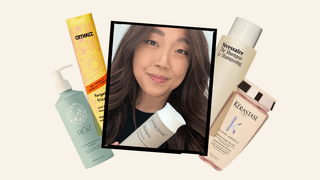
    Image contains an Allure editor holding the Living Proof No Frizz Shampoo surrounded by a collage of the best shampoos...Collage: Paula Balondo; Source images: Courtesy of Allure editor and brandsSave StorySave this storySave StorySave this story

    Nobody has ever air-dried their hair—or put the finishing touches on a blowout—and thought, You know what this look needs? More frizz! That's why the best shampoos for frizzy hair start working long before you reach for a styling cream or hair oil. "Shampoo is the first item needed to combat the frizzies," says Las Vegas-based hairstylist Gina Rivera. The right formula cleanses without stripping the natural oils that keep the hair cuticle smooth, while ingredients like ceramides, humectants, and nourishing oils seal in moisture and prevent humidity from puffing up hair.

    The trick is finding one that's tailored to your hair type: Fine hair needs lightweight hydration that won't flatten volume, curly hair craves extra moisture to compensate for oils that struggle to travel from roots to ends, and color-treated hair benefits from formulas that keep the cuticle sealed so color stays vibrant, and frizz stays at bay.

    Our Top Shampoos for Frizzy Hair

    • Best Overall: Living Proof No Frizz Shampoo, $36
    • Best for Fine Hair: Kérastase Gloss Absolu Shampoo, $43
    • Best for Thick Hair: Amika Forget Frizz Anti-Frizz Shampoo, $28
    • Best for Damaged Hair: K18 Damage Shield PH Protective Shampoo, $39

    Frequently Asked QuestionsAccordionItemContainerButtonLargeChevron

    • What causes frizzy hair?
    • How to reduce frizz
    • Meet the experts
    • How we test and review products
    • Our staff and testers

    Ahead, the shampoos our editors, hairstylists, and testers rely on for smoother, shinier, more manageable hair.

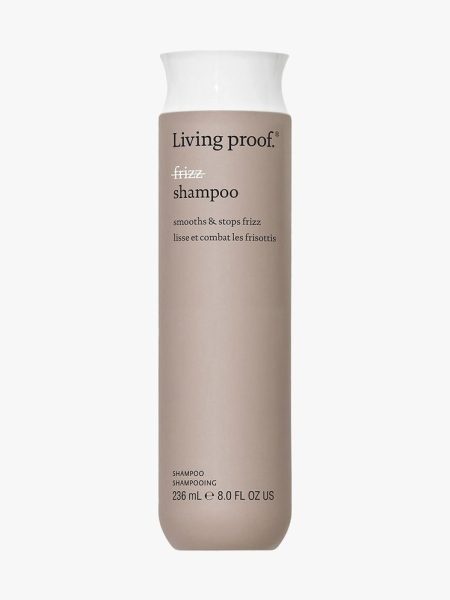
    Best Overall: Living Proof No Frizz Shampoo

    Living Proof No Frizz Shampoo greige bottle of shampoo with white cap on light gray backgroundSave to wishlistSave to wishlist

    Living Proof

    No Frizz Shampoo

    $36

    Amazon

    $36

    Nordstrom

    $36

    Ulta Beauty

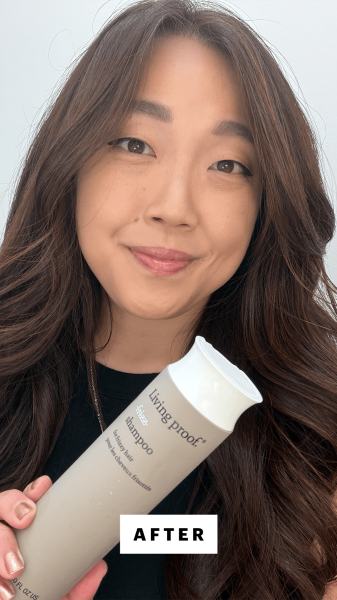
    Allure contributing commerce writer Christa Joanna Lee after using the Living Proof No Frizz Shampoo

    Allure contributing commerce writer Christa Joanna Lee after using the Living Proof No Frizz Shampoo

    Christa Joanna Lee

    Why it's worth it: It may have been almost two decades since Living Proof’s No Frizz Shampoo launched (and immediately earned an Allure Best of Beauty Breakthrough Award), but it's never stopped being among the first shampoos stylists mention when someone wants to tackle frizz. "Its smoothing and humidity-resistant benefits make it an excellent choice for frizz-prone hair because it gently cleanses without stripping away essential moisture," says Nicolas Flores, a hairstylist based in Los Angeles.

    The formula was updated last year with the brand's proprietary Sili-Clone HairTech, which mimics the sleekness, shine, and slip of silicones—without the buildup that can potentially weigh fine hair down in particular. (Despite their reputation, silicones are often a great choice for dry, coarse, and frizz-prone hair.) Instead, it relies on a blend of gentle, sulfate-free cleansers, while conditioning hydrolyzed jojoba esters and sunflower-derived conditioning agents soften strands and smooth the hair cuticle. "This shampoo sets the foundation for healthy-looking hair,” says Flores.

    Tester feedback from contributing commerce writer Christa Joanna Lee

    AccordionItemContainerButtonLargeChevron

    “Living Proof's No Frizz Shampoo is one of the few shampoos that leaves my dry hair and flaky scalp feeling clean without that stripped, squeaky sensation. Since I wash my hair every day (and my long hair falls halfway down my back), I appreciate that it has conditioning properties built right into the formula, so it helps smooth frizz before I even reach for conditioner.” —Christa Joanna Lee, contributing commerce writer

    More to know

    AccordionItemContainerButtonLargeChevron

    • Key ingredients: jojoba esters, amino acids, marine algae extract
    • Who it's for: all hair types
    • Sulfate-free: yes
    • Silicone-free: yes
    • Fragrance-free: no

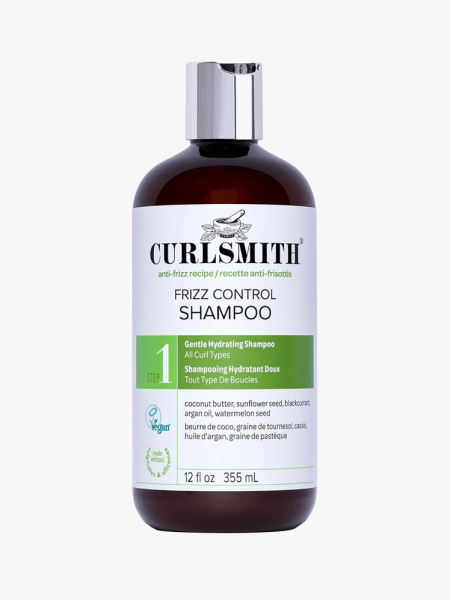
    Best for Curly Hair: Curlsmith Frizz Control Shampoo

    Curlsmith Frizz Control Shampoo in branded component on a light gray backgroundSave to wishlistSave to wishlist

    Curlsmith

    Frizz Control Shampoo

    $26

    Amazon

    $26

    Ulta Beauty

    $26

    Sephora

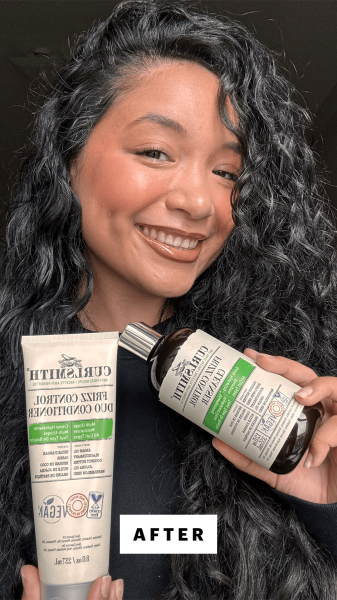
    Selfie of Bianca Richards after applying the Curlsmith Frizz Control Cleanser and Duo Conditioner

    Social media manager Bianca Richards after washing with Curlsmith Frizz Control Shampoo

    Bianca Richards

    Why it's worth it: Because it's harder for the scalp's natural oils to travel from roots to ends, curly hair tends to be drier—and dry hair is much more prone to frizz. That's why Curlsmith's Frizz Control Shampoo uses gentle cleansers that won't strip away the moisture curls naturally struggle to hold onto. Coconut butter locks in hydration, while argan oil, blackcurrant seed oil, and squalane nourish strands, smooth the cuticle, and boost shine. Conditioning agents improve slip, too, so curls detangle more easily with less friction, leaving them more defined and less prone to puffing up. Our tester considers it a must-have in the summer months.

    Tester feedback from social media manager Bianca Richards

    AccordionItemContainerButtonLargeChevron

    “As someone with 2B to 2C curls, in the summer, it's easy for my hair strands to appear frizzier and feel drier than usual due to the intense heat, and I need to give my curls an extra dose of TLC. The Curlsmith Frizz Control Cleanser has been my saving grace in the warmer months for its ability to retain moisture in my hair strands for softer, shinier curls. Unlike the other shampoos in my rotation that are geared towards detoxifying the scalp, the shampoo is enriched with coconut butter and argan oil, two nourishing ingredients that work well to maintain the health of my strands.” —Bianca Richards, social media manager

    More to know

    AccordionItemContainerButtonLargeChevron

    • Key ingredients: coconut butter, argan oil, sunflower seed oil
    • Who it's for: curly hair types, textured hair types
    • Sulfate-free: yes
    • Silicone-free: yes
    • Fragrance-free: no

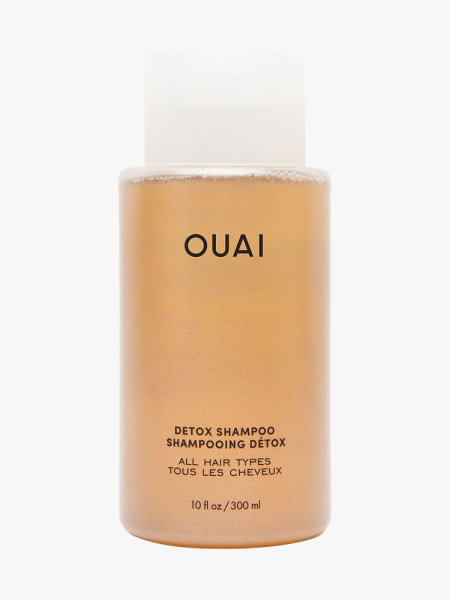
    Best Clarifying: Ouai The Detox Shampoo

    Ouai The Detox Shampoo bottle of amber shampoo on light gray backgroundSave to wishlistSave to wishlist

    Ouai

    The Detox Shampoo

    $34

    Amazon

    $34

    Sephora

    $34

    Ulta Beauty

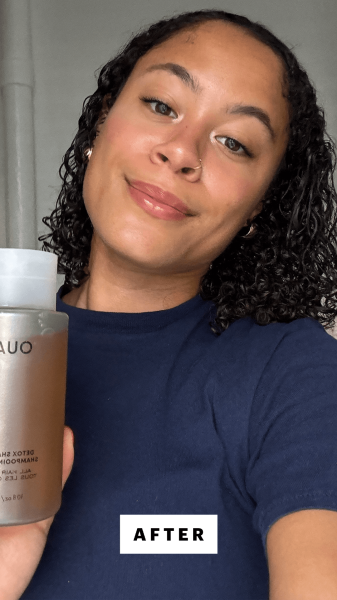
    Allure commerce editorial assistant Hailey Roy after using the Ouai The Detox Shampoo

    Allure commerce editorial assistant Hailey Roy after using the Ouai The Detox Shampoo

    Hailey Roy

    Why it’s worth it: A clarifying shampoo isn't inherently an anti-frizz shampoo, but it can be the missing piece if buildup leaves your hair looking dull, feeling rough, or harder to manage. Layers of styling products, dry shampoo, oils, and even hard water minerals can prevent conditioners and masks from penetrating the hair shaft, leaving strands dry and therefore frizz-prone. Ouai’s Detox Shampoo wipes the slate clean with a deep-cleansing blend of surfactants while apple cider vinegar “dissolves residue, excess oil, buildup,” says Flores. It doesn't stop there, though: Hydrolyzed keratin reinforces weakened strands, glycerin replenishes moisture, and conditioning polymers leave hair feeling soft instead of too squeaky-clean. Reserve it for a weekly reset, as overuse of a clarifying shampoo can strip natural oils, leaving hair more vulnerable to dryness and frizz.

    Tester feedback from commerce editorial assistant Hailey Roy

    AccordionItemContainerButtonLargeChevron

    “I kid you not, my super dry curly hair was collecting compliments on its shine after using this shampoo. I was skeptical of a shampoo adding shine, and I was shocked. Because of how clean the shampoo claims to make your scalp, I thought it would strip my hair down to Sahara Desert status. But it did the exact opposite. Most shampoos tend to make my hair feel brittle before I even lather on conditioner. While I was massaging this shampoo in, it did feel dry (I have yet to find a shampoo that doesn't leave my hair feeling dry before conditioner), but it felt less dry than usual. Disclaimer: The end results were far from parched. Another plus: A small dollop was enough to lather up my entire scalp—a win for me because I know this pricey product will last. The cherry on top is the fresh fragrance, which makes your scalp feel extra squeaky clean.” —Hailey Roy, commerce editorial assistant

    More to know

    AccordionItemContainerButtonLargeChevron

    • Key ingredients: apple cider vinegar, hydrolyzed keratin, glycerin, conditioning polymers
    • Who it's for: flaky scalps, oily hair
    • Sulfate-free: yes
    • Silicone-free: yes
    • Fragrance-free: no

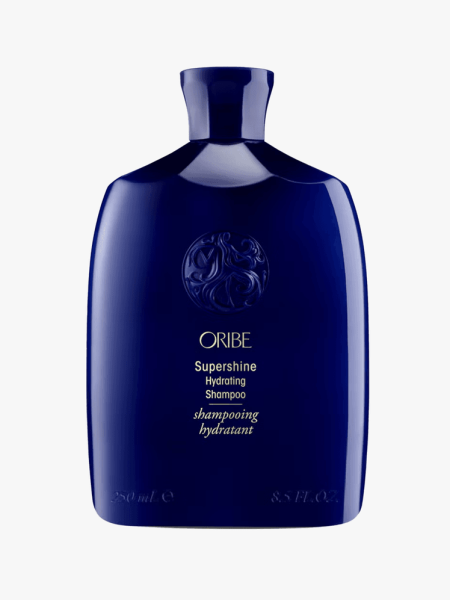
    Best for Shine: Oribe Supershine Hydrating Shampoo

    Oribe Supershine Hydrating Shampoo in branded component on a light gray backgroundSave to wishlistSave to wishlist

    Oribe

    Supershine Hydrating Shampoo

    $49

    Amazon

    $49

    Nordstrom

    $49

    Dermstore

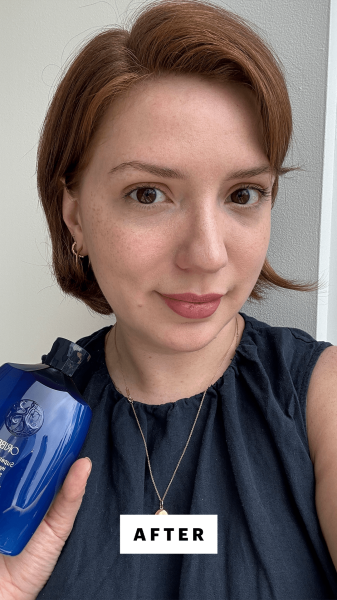
    Allure social director Kassidy Silva after using the Oribe Supershine Hydrating Shampoo

    Allure social director Kassidy Silva after using the Oribe Supershine Hydrating Shampoo

    Kassidy Silva

    Why it's worth it: Frizzy hair has a tough time looking shiny because instead of reflecting light evenly, those raised cuticles scatter light in every direction, making strands appear dull no matter how healthy they are. Oribe’s Supershine Hydrating Shampoo smooths hair's surface from the very first wash with moisture-binding humectants like glycerin, conditioning silicones, and pro-vitamin B5, which soften hair while boosting shine. One of the more unique additions is the brand's Cranberry Complex, which pairs cranberry extract with upcycled cranberry seed oil to nourish dry hair and smooth the cuticle for a glossier finish, while Oribe's signature blend of watermelon, lychee, and edelweiss flower extracts protects against UV exposure and environmental stressors that can leave hair looking dry and lackluster.

    Tester feedback from social director Kassidy Silva

    AccordionItemContainerButtonLargeChevron

    “If there is a drop of humidity in the air, my hair begins to frizz. One of the best combatants in my arsenal is the Oribe Supershine Hydrating Shampoo. I give my hair a good scrub in the morning, followed up with a good dollop of conditioner, and finish it off with a leave-in conditioner after I've dried my hair, usually the Oribe Supershine Light Moisturizing Leave-In Hair Cream or the RŌZ Milk Hair Serum.” —Kassidy Silva, social director

    More to know

    AccordionItemContainerButtonLargeChevron

    • Key ingredients: glycerin, silicones, pro-vitamin B5, Cranberry Compex (cranberry extract, upcycled cranberry seed oil), Oribe Signature Complex (watermelon, lychee, and edelweiss flower extracts)
    • Who it's for: people with dull, coarse, or thick hair
    • Sulfate-free: yes
    • Silicone-free: yes
    • Fragrance-free: no

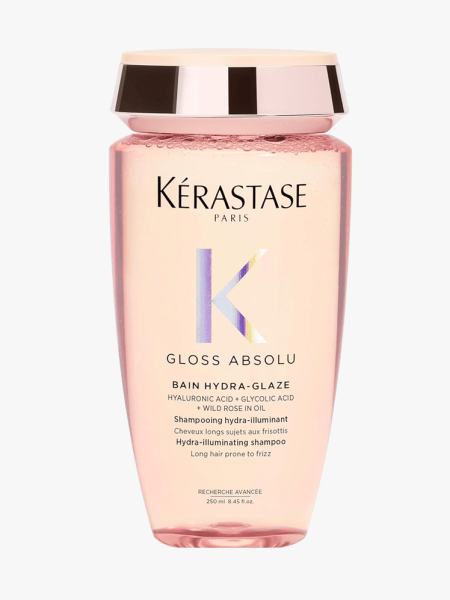
    Best for Fine Hair: Kérastase Gloss Absolu Shampoo

    Kérastase Gloss Absolu Shampoo in branded component on a light gray backgroundSave to wishlistSave to wishlist

    Kérastase

    Gloss Absolu Shampoo

    $43

    Amazon

    $43

    Sephora

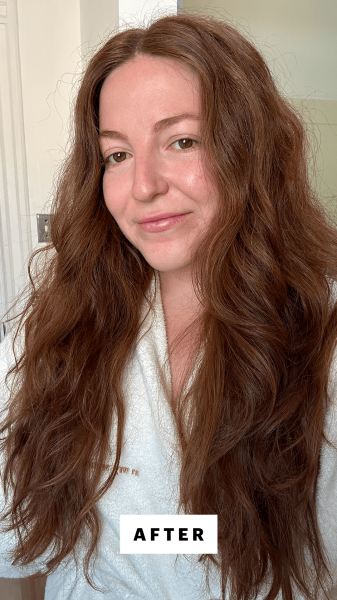
    Allure senior staff writer Elizabeth Gulino after using the Krastase Gloss Absolu Shampoo

    Allure senior staff writer Elizabeth Gulino after using the Kérastase Gloss Absolu Shampoo

    Elizabeth Gulino

    Why it's worth it: People with fine hair often have lots of wisps around the hairline and part; because each strand is so lightweight, it's more easily lifted by humidity and static. So, if your flyaways have a mind of their own, Kérastase’s Gloss Absolu Shampoo is our stylists’ “go-to for achieving softer, shinier, more manageable hair,” says Flores. It contains hyaluronic acid that floods strands with moisture to keep the cuticle smooth and hydrated, while glycolic acid smooths the hair's surface to reduce frizz and amplify shine. Wild rose oil, rich in vitamins A, C, and E, adds softness and gloss, while the sulfate-based formula lathers extra nicely to clarify the scalp. “This shampoo will bring your hair back to life in just a few washes without adding extra weight to fine, fragile hair,” says Taylor Murphy, a hairstylist based in Raleigh, North Carolina.

    Tester feedback from senior staff writer Elizabeth Gulino

    AccordionItemContainerButtonLargeChevron

    “I would like to personally thank whoever formulated Kérastase's Gloss Absolu line because wow, did it actually help with my frizz and dryness. The first time I used both the shampoo and conditioner was on a Friday before heading out to dinner with friends—usually, when I air dry my wavy hair, I'll add in a few curls with a curling iron to try and tame any frizz with heat. But after using Kérastase's Gloss Absolu Shampoo and Conditioner I didn't even need to plug in any hot tools, my hair was good to go as-is. The citrus-y floral scent of the products is a major plus, too, and made my shower smell like a spa. I have a feeling I'll go through these products fairly quickly.” —Elizabeth Gulino, senior staff writer

    More to know

    AccordionItemContainerButtonLargeChevron

    • Key ingredients: hyaluronic acid, glycolic acid, wild rose oil, vitamins A, C, and E
    • Who it's for: people with fine or medium hair
    • Sulfate-free: no
    • Silicone-free: yes
    • Fragrance-free: no

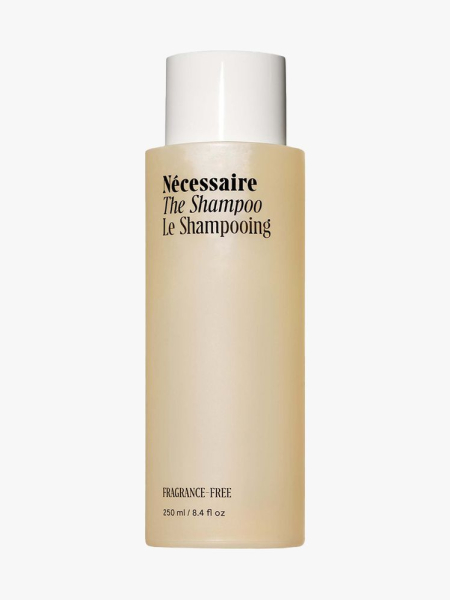
    Best for Dry Hair: Nécessaire The Shampoo

    Nécessaire The Shampoo beige bottle of shampoo with white cap on light gray backgroundSave to wishlistSave to wishlist

    Nécessaire

    The Shampoo

    $32

    Amazon

    $32

    Nordstrom

    $32

    Sephora

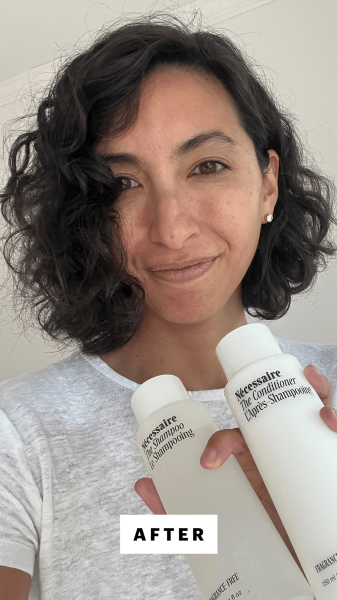
    Allure contributing commerce editor Deanna Pai after using the Ncessaire The Shampoo and Conditioner

    Allure contributing commerce editor Deanna Pai after using the Nécessaire The Shampoo and Conditioner

    Deanna Pai

    Why it's worth it: Because dry hair has a harder time keeping its cuticle smooth, it's also more likely to frizz at the first sign of humidity. Nécessaire’s The Shampoo starts at the source: a well-moisturized scalp creates a better environment for healthier-looking hair. The sulfate-free shampoo packs in niacinamide to support the scalp barrier, hyaluronic acid and glycerin to draw in moisture, plus aloe vera and panthenol to soothe and soften. One ingredient you don't often see in shampoo is ApiScalp, a celery seed-derived active designed to soothe dryness and support a healthier scalp environment. The 2022 Best of Beauty Award winner is also fragrance-free and accepted by the National Eczema Association, meaning it meets high standards for ingredients that are less likely to irritate sensitive skin—a big plus if your dry scalp gets itchy, tight, or reactive.

    Tester feedback from contributing commerce editor Deanna Pai

    AccordionItemContainerButtonLargeChevron

    “This shampoo and conditioner hit it out of the park for both my scalp and my hair. For one, they're among the few formulas that don't dry out my scalp and cause flakes. The same goes for my hair: Together, they leave it soft, shiny, and clean, but never straw-like—which is especially noteworthy since I'm a daily hair-washer.” —Deanna Pai, contributing commerce editor

    More to know

    AccordionItemContainerButtonLargeChevron

    • Key ingredients: hyaluronic acid, niacinamide, panthenol
    • Who it's for: all hair types, sensitive scalps
    • Sulfate-free: yes
    • Silicone-free: yes
    • Fragrance-free: yes

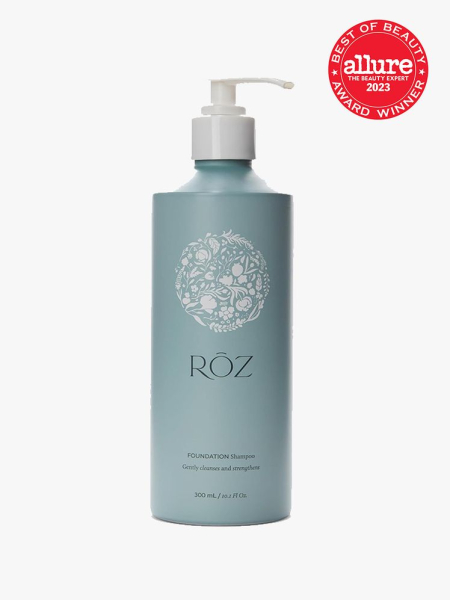
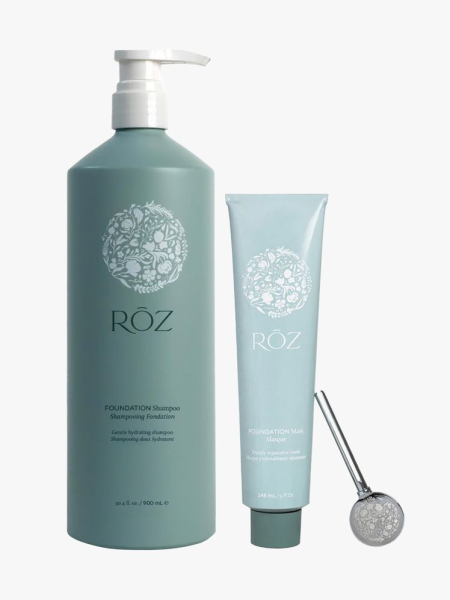
    Best Sulfate-Free: RŌZ Foundation Shampoo

    A light blue pump bottle with white pump cap of the Roz Foundation Shampoo on a light gray backgroundSave to wishlistSave to wishlist

    RÔZ

    Foundation Shampoo

    $39

    Amazon

    $39

    Nordstrom

    $39

    Sephora

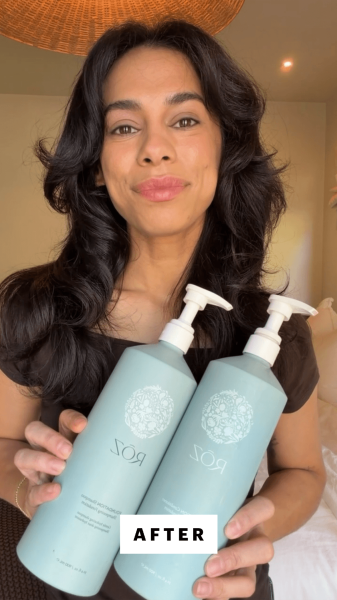
    Allure senior commerce director Shanna Shipin after using the RŌZ Foundation Shampoo and Conditioner

    Allure senior commerce director Shanna Shipin after using the RŌZ Foundation Shampoo and Conditioner

    Shanna Shipin

    Why it's worth it: Living up to its name, RŌZ’s Foundation Shampoo is designed to create the ideal starting point for healthier-looking hair. The sulfate- and silicone-free formula gently washes away buildup while a trio of ceramides reinforces the hair barrier, smooths the cuticle, and seals in moisture. The 2023 Allure Best of Beauty Award-winner in our Clean category also contains pea peptides that strengthen strands, while grape vine sap, grape fruit extract, and ginger root extract provide antioxidant support to keep hair looking healthy and vibrant. It leaves hair feeling clean, soft, and bouncy, making it especially well-suited for anyone trying to tame frizz without sacrificing natural movement.

    Tester feedback from senior commerce director Shanna Shipin

    AccordionItemContainerButtonLargeChevron

    “I first fell in love with Rōz's shampoo from the bottle alone, but next came the scent—when do you ever get ginger and frankincense in your hair care?! It's cleansing without stripping my already-dry curly hair, which ultimately helps ward off frizz. Plus, I find that it lathers really nicely compared to other 'clean' shampoo products." —Shanna Shipin, senior commerce director

    More to know

    AccordionItemContainerButtonLargeChevron

    • Key ingredients: coconut-based surfactants, peptides, ceramides
    • Who it's for: fine hair types, color-treated hair
    • Sulfate-free: yes
    • Silicone-free: yes
    • Fragrance-free: no

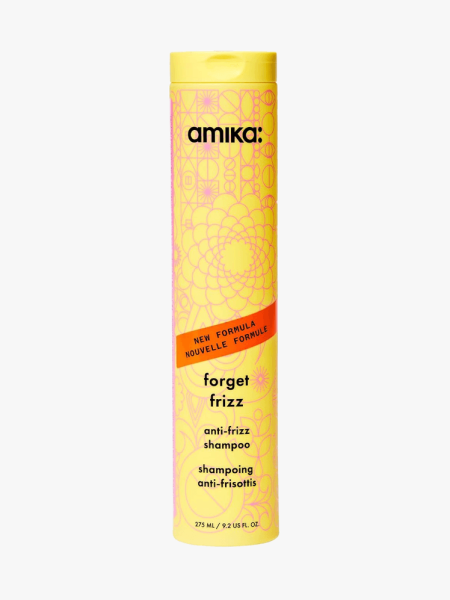
    Best for Thick Hair: Amika Forget Frizz Anti-Frizz Shampoo

    Amika Forget Frizz Anti-Frizz Shampoo in branded component on a light gray backgroundSave to wishlistSave to wishlist

    Amika

    Forget Frizz Anti-Frizz Shampoo

    $28

    Amazon

    $28

    Ulta Beauty

    $28

    Sephora

    Why it's worth it: Amika's Forget Frizz Anti-Frizz Shampoo uses heat-activated smoothing technology that works with your blow-dryer to create a lightweight, humidity-resistant veil over the hair cuticle. (In other words, try another option if you’re air-drying.) By helping keep excess moisture from penetrating the hair shaft—a major cause of frizz—it leaves thick hair looking sleeker and smoother long after styling. Water lily extract tames frizz and improves manageability, while aloe leaf juice boosts shine and retains moisture. The brand's signature sea buckthorn oil, naturally rich in fatty acids, antioxidants, and vitamins, nourishes the cuticle, while lightweight silicones seal everything in for a glossy, polished finish. "Its texture is slightly on the richer side, so it's amazing for thicker hair because it locks moisture," says Murphy. "Plus, it smells incredible."

    More to know

    AccordionItemContainerButtonLargeChevron

    • Key ingredients: water lily extract, silicone, sea buckthorn oil
    • Who it's for: people with medium-to-thick, coarse, wavy, or coily hair types prone to frizz
    • Sulfate-free: yes
    • Silicone-free: no
    • Fragrance-free: no

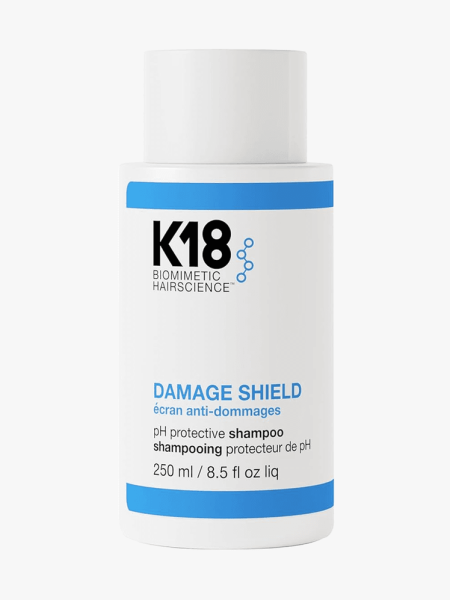
    Best for Damaged Hair: K18 Damage Shield PH Protective Shampoo

    K18 Damage Shield pH Protective Shampoo in branded bottle component on a light gray backgroundSave to wishlistSave to wishlist

    K18

    Damage Shield pH Protective Shampoo

    $39

    Amazon

    $39

    Sephora

    Why it's worth it: If there's one brand that's become synonymous with repairing damaged hair, it's K18. The biotech-powered brand is best known for its patented K18Peptide, which repairs damaged hair from within rather than just masking surface damage. Its Damage Shield pH Protective Shampoo takes a similarly science-backed approach to frizz, using a pH that's close to hair's naturally slightly acidic state to keep the cuticle compact during washing. “That means less swelling, less humidity sneaking into the hair shaft, and ultimately smoother, shinier strands,” says Flores.

    More to know

    AccordionItemContainerButtonLargeChevron

    • Key ingredients: K18Peptide, panthenol, glycerin
    • Who it's for: people with frizzy hair caused by damaged hair
    • Sulfate-free: no
    • Silicone-free: no
    • Fragrance-free: no

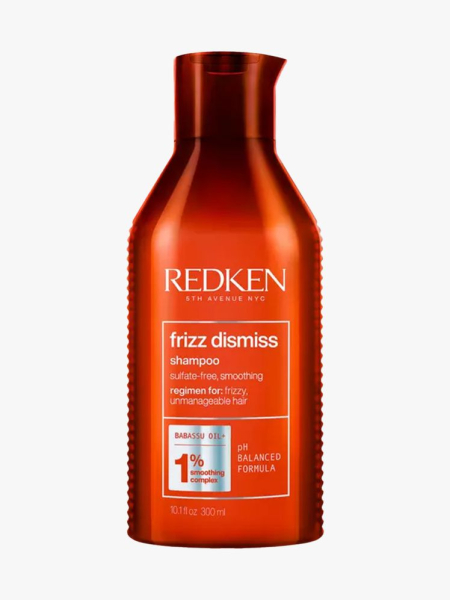
    Best for Color-Treated Hair: Redken Frizz Dismiss Shampoo

    Redken Frizz Dismiss Sulfate-Free Shampoo copper bottle of shampoo on light gray backgroundSave to wishlistSave to wishlist

    Redken

    Frizz Dismiss Sulfate-Free Shampoo

    $29

    Amazon

    $29

    Ulta Beauty

    Why it's worth it: Treating frizz isn't just a matter of smoothing hair—by keeping the cuticle smooth and compact, color-treated hair is better able to hold onto its pigment, so your shade stays vibrant for longer. Redken’s Frizz Dismiss Shampoo is free of both sulfates and sodium chloride (a common thickening agent), so it cleanses without stripping away the natural oils that keep colored hair vibrant, says Murphy. Meanwhile, smoothing silicones seal the cuticle to lock out humidity, tame frizz, and boost shine, while lightweight babassu oil replenishes moisture, leaving color-treated strands softer, silkier, and less prone to the dryness that often comes with chemical processing.

    More to know

    AccordionItemContainerButtonLargeChevron

    • Key ingredients: babassu oil
    • Who it's for: all hair types, color-treated hair
    • Sulfate-free: yes
    • Silicone-free: no
    • Fragrance-free: no

    Frequently Asked Questions

    What causes frizzy hair?

    Chances are, the roots of your frizziness stem from multiple factors, but one of the biggest culprits is a lack of moisture. In its simplest definition, frizz occurs when the outermost cuticle layer of the hair shaft is misaligned, creating a jagged appearance. What causes this misalignment, according to Seattle-based hairstylist Jen Atkin, is your hair trying to replenish moisture by absorbing it from the air. "So making sure you're conditioning and masking will help your hair combat that and leave it moisturized without wanting to absorb the moisture outside," she previously told Allure.

    How to reduce frizz

    Frizz isn't permanent, so there are quite a few ways to address frizzy strands. According to Shelly Aguirre, a hairstylist based in Chicago, frizzy hair is often dry, so moisturization is essential. The best shampoos for frizzy hair target dryness and contain "naturally hydrating ingredients that will smooth the hair shaft but not overly weigh the hair down," New York City-based hairstylist and colorist Paul Labrecque tells Allure.

    More specifically, you'll want to look for hair products that contain natural oils (such as argan and coconut), shea butter, and aloe vera, all of which, per Labrecque, "help to smooth and tame frizz while gently hydrating and cleansing the hair." Conversely, every hair pro we spoke to advised steering clear of shampoos with sulfates, which can strip your strands of essential oils and dry them out (spoiler alert: It’s a big no-no when it comes to wrangling frizz).

    Meet the experts

    • Shelly Aguirre, a hairstylist at Maxine Salon in Chicago
    • Jen Atkin, a hairstylist and founder of Ouai and Mane based in Seattle
    • Nicolas Flores, a hairstylist and co-founder of Flore Los Angeles based in Los Angeles
    • Paul Labrecque, a hairstylist and colorist and founder of the Paul Labrecque Salon and Skincare Spa based in New York City
    • Taylor Murphy, a hairstylist based in Raleigh, North Carolina
    • Gina Rivera, hair artist and founder of Phenix Salon Suites based in Las Vegas

    How we test and review products

    We always enlist a range of testers for our makeup vertical, but hair-care products and tools are another story. While there are certainly products that can be used across different hair textures, lengths, curl patterns, thicknesses, colors (natural and unnatural), and needs, hair products are often created with specific consumers in mind. Many are created in order to address a concern (dandruff, breakage, brittleness) or to work most effectively for a specific hair type (4C curls, wavy hair, gray hair). You wouldn’t want to pick up a purple shampoo that’s only been reviewed by someone with, say, auburn hair, or a diffuser that’s never been tested by anyone with curls—right?

    For our review of the best shampoos for frizzy hair, we enlisted the help of multiple editors, writers, contributors, and hair stylists—who all deal with frizz and would like sleeker results. Testers considered performance across four primary categories: efficacy, texture and experience, fragrance, and packaging. For more on what's involved in our reporting, check out our complete reviews process and methodology page.

    Our staff and testers

    A beauty product is a personal purchase. You might be searching for a face cream to address persistent dryness or a new nail product to add to your Sunday self-care routine; you may simply be browsing around for the latest launches to hit the hair market. No matter what you seek or your individual needs and concerns, Allure wants to ensure that you love anything we recommend in our stories. We believe that having a diverse team of writers and editors—in addition to the wide range of outside testers and industry experts we regularly call upon—is essential to reaching that goal.

    After all, can we really say a skin-care product is the "best" for people over 50 if the only testers we’ve solicited opinions from folks who have yet to hit 30? Can we honestly deem a high-end diffuser worthy of your hard-earned cash if it’s never been tested on curls? We’re proud that our staff spans a wide range of ages, skin tones, hair textures, genders, and backgrounds, which means that we are able to fairly assess any beauty product that comes into the beauty closet.
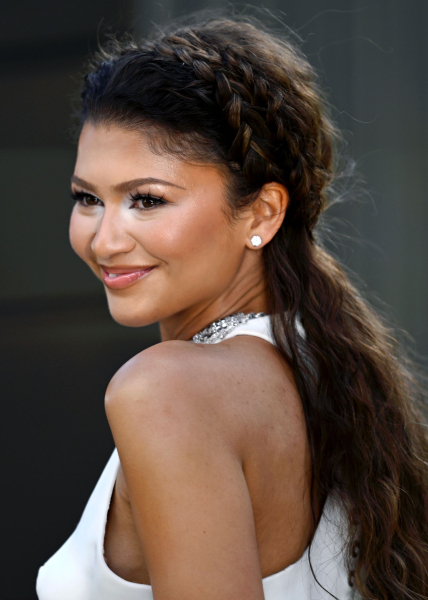
  • “Bob Kardashian” Is Back, Says Khloé Kardashian—See the Photos

    “Bob Kardashian” Is Back, Says Khloé Kardashian—See the Photos

    Khlo Kardashian wears a patterned dress and wears her long hair half up.Getty ImagesSave StorySave this storySave StorySave this story

    Just a few hours after dropping pics of herself with voluminous, body-licious curls, Khloé Kardashian decided to kick off August with a fresh hair cut—and introduced us all to her alter ego, Bob Kardashian, in the process.

    Kardashian shared a peek at her latest foray into short hair on Instagram Stories, joking that “Bob Kardashian” had returned after months of long, flowing waves. She tagged celebrity hairstylist Chris McMillan as the talented hands behind her new short hair and gave us a full view of the blunt cut, which barely skims her collarbone. And the cut looks very fresh, with Kardashian's honey-bronde hair parted in the center and worn loose with just a teeny bit of wavy texture at the ends. It really toes the line between bob and lob—not super short, but not quite shoulder length, either.

    Khlo Kardashian poses in her bathroom wearing zebra pajamas. Her hair is cut in a long blunt bob.instagram.com/khloekardashian

    The name “Bob Kardashian” is a funny joke on so many levels, given that Kardashian loves a bob and goes back to short, above-the-shoulder-length hair all the time; it could be a cute inside joke between the star and her hairstylist. She's a big fan of long, bombshell blowout or beachy waves too, but there's something about a bob or lob that feels so very Khloé. But there are a few more layers here (pun intended), because her late father and younger brother are both named Robert, a.k.a. Bob, so technically there already is a Bob Kardashian… well, two Bobs, to be exact.

    The Instagram Story was a pretty casual way to debut a hair cut, as Kardashian noted in her story that she was marinating in a spray tan and needed to wash it off before officially debuting her fresh chop for the world to see. But hey, we get the urge to show off a new hairstyle ASAP, and it is the peak of summer where long hair feels hot, heavy, and sweaty against your neck. Pleased to (re)meet you, Bob Kardashian!

    More of the latest celebrity beauty news:

    • Zara Larsson's Eye Makeup Would Be Right at Home Under the Sea
    • No, Lindsay Lohan Didn't Actually Return to Her Natural Red Hair Color
    • All the Details Behind Tate McRae's Gold-Dipped Lollapalooza Finale
  • 7 Best Shampoos and Conditioners for Color-Treated Hair to Stay Vibrant and Fresh

    7 Best Shampoos and Conditioners for Color-Treated Hair to Stay Vibrant and Fresh

    collage of productsCollage: Paula Balondo; Source images: Courtesy of brands and editorsSave StorySave this storySave StorySave this story

    There’s nothing quite like leaving the salon with glossy, freshly colored hair. While fading is inevitable over time, using the best shampoos and conditioners for color-treated hair can help extend the life of your meticulously crafted shade between salon visits. These gentle, often sulfate-free formulas cleanse away oil, flakes, and product buildup without stripping pigment so that your pricey balayage, bleach-and-dye treatment, or at-home color job continues to look as good on day 30 as it did on day one.

    Regular shampoos aren’t necessarily formulated with color-treated hair in mind. Many, like sulfate-filled or clarifying shampoos, contain strong cleansing agents that can strip away color, which can ultimately cause your fresh color to fade faster and lose its shine. Long story short: “Using a shampoo made for color-treated hair helps protect your investment, keeps the color looking fresh longer, and helps maintain shine and overall hair health between appointments,” says Sierra Kener Mehl, a hairstylist based in West Hollywood. Color-safe conditioners, for their part, also help keep your strands feeling moisturized and healthy, which is especially important after a dye job when they might be especially dry, damaged, and in need of a little extra TLC.

    Our Top Shampoos and Conditioners for Color-Treated Hair

    • Best Overall: Pureology Hydrate Moisturizing Shampoo and Conditioner, $76
    • Best for Blondes and Bleached Hair: Biolage Professional Hair Spa Color Last Shampoo & Conditioner, $52
    • Best for Graying Hair: Rōz Foundation Shampoo ($39) and Mask ($48)
    • Best Drugstore: L'Oréal Paris EverPure Moisture Shampoo and Conditioner, $18

    Whether your color is fresh from the salon or courtesy of an at-home dye kit, upgrading your wash-day routine with a color-safe shampoo and conditioner set is one of the easiest ways to keep things looking vibrant. After months of testing, these are the duos worth adding to your shower.

    Frequently Asked QuestionsAccordionItemContainerButtonLargeChevron

    • What shampoos should you avoid for color-treated hair?
    • How often should I wash color-treated hair?
    • What causes hair color to fade?
    • What are sulfates, and are they bad for color-treated hair?
    • How is shampoo for colored hair different than "regular" shampoos?
    • Which shampoo is right for my hair color?
    • Meet the experts
    • How we test and review products
    • Our staff and testers

    Best Overall: Pureology Hydrate Moisturizing Shampoo and Conditioner

    Pureology Hydrate Moisturizing Shampoo and Conditioner in branded components on a light gray backgroundSave to wishlistSave to wishlist

    Pureology

    Hydrate Moisturizing Shampoo and Conditioner

    $76

    Amazon

    Why we love it: Whether you have just a touch of subtle highlights or a full head of faux color, Pureology’s Hydrate Moisturizing Shampoo and Conditioner are up for the task. This Allure Best of Beauty Award-winning duo is one of our all-time favorite in-shower combos for its brass-busting lavender tint and creamy, jojoba oil-powered formulas that leave hair impressively smooth. Both the shampoo and conditioner also contain antioxidant-rich green tea and sage extracts to hydrate strands while supporting scalp health. Keep in mind that the original formula might be too heavy for finer hair types, but no sweat: Pureology also makes lightweight options specifically for thinner hair.

    Kinonen before applying the Pureology Hydrate Moisturizing Shampoo and Conditioner

    Allure beauty director Sarah Kinonen before using the Pureology Hydrate Moisturizing Shampoo and Conditioner

    Sarah KinonenKinonen after applying the Pureology Hydrate Moisturizing Shampoo and Conditioner

    Kinonen after using the Pureology Hydrate Moisturizing Shampoo and Conditioner

    Sarah Kinonen

    Tester feedback from beauty director Sarah Kinonen

    AccordionItemContainerButtonLargeChevron

    “As someone who washes their hair once a week, my shampoo-and-conditioner selection is super important. I have long, fine, color-treated hair, so it has a lot of needs: hydration, damage control, and color protection. This Pureology duo does all of the above and more with an earthy (shampoo) and minty (conditioner) scent that lingers long past the last rinse. I typically double- (and sometimes even triple-) shampoo because of how dirty and oily my hair gets during the week. I love that this one lathers fast—I’m pro suds (and sulfates)! As for the conditioner, I like to use it as more of a mask, raking it through my mids to my ends, and then letting it marinate while I shave my legs. The result is always soft, shiny, and super-clean hair.” —Sarah Kinonen, beauty director

    More to know

    AccordionItemContainerButtonLargeChevron

    • Key ingredients: jojoba oil, green tea extract, sage extract
    • Sulfate-free: yes
    • Who it's for: all hair types

    Best for Blondes and Bleached Hair: Biolage Professional Hair Spa Color Last Shampoo & Conditioner

    Biolage Professional Hair Spa Color Last Shampoo & Conditioner in branded components with best of beauty 2025 seal in the top right corner on a light gray backgroundSave to wishlistSave to wishlist

    Biolage

    Professional Hair Spa Color Last Shampoo & Conditioner

    $52

    Amazon

    $26

    Ulta Beauty (Shampoo)

    $26

    Ulta Beauty (Conditioner)

    Why we love it: Biolage’s Professional Hair Spa Color Last Shampoo & Conditioner features moisturizing soybean oil and stearic acid, an ingredient that acts like a lightweight barrier over your strands to protect color from fading. Together, they maintain your color’s luster for weeks, making it a bit more feasible to stretch out the time between your salon appointments—no wonder it won an Allure Best of Beauty Award in 2025. As its key ingredients seal in much-needed moisture and assist in preserving color, its formula gently washes away dirt, oil, and buildup as you lather. Though it’s not a purple shampoo, our blonde-haired testers found that this duo amps up brightness without leading to brassiness or stripped color, making it a great option for lighter hair colors.

    Allure commerce editor Sarah Han before using the Biolage Professional Hair Spa Color Last Shampoo  Conditioner

    Allure commerce editor Sarah Han before using the Biolage Professional Hair Spa Color Last Shampoo & Conditioner

    Sarah HanAllure commerce editor Sarah Han before using the Biolage Professional Hair Spa Color Last Shampoo  Conditioner

    Han after using the Biolage Professional Hair Spa Color Last Shampoo & Conditioner

    Sarah Han

    Tester feedback from commerce editor Sarah Han

    AccordionItemContainerButtonLargeChevron

    “I've put my hair through the wringer, a.k.a. double-bleached it many times throughout the years, and it shows in how dry and brittle it gets. I used to use a color-depositing shampoo every other wash, which is too often because it doesn't do a great job of actually hydrating my hair. This Biolage duo leaves my hair feeling soft post-shower and my pink surprisingly intact—and thank goodness. My color also looks overall brighter, which is the cherry on top!” —Sarah Han, commerce editor

    Tester feedback from global senior director of commerce audience & analytics Lexi Herrick

    AccordionItemContainerButtonLargeChevron

    “This Biolage shampoo-and-conditioner combo has become one of my absolute staples. It provides a thorough clean and deep-conditioning, smells amazing, and brightens my blonde almost instantly. As someone who has been actively trying to delay my highlights appointments, I can visibly see this product extending the life of my color over time.” —Lexi Herrick, global senior director of commerce audience and analytics

    More to know

    AccordionItemContainerButtonLargeChevron

    • Key ingredients: soybean oil, stearic acid
    • Sulfate-free: no
    • Who it's for: blondes and lighter hair colors, dry hair

    Best for Graying Hair: Rōz Foundation Shampoo and Mask

    Rôz Foundation Shampoo and Mask turquoise bottle and tube on light gray backgroundSave to wishlistSave to wishlist

    RŌZ

    Foundation Shampoo and Mask

    $39

    Amazon (Shampoo)

    $48

    Amazon (Mask)

    $48

    Nordstrom (Shampoo)

    $48

    Nordstrom (Mask)

    Why we love it: This duo isn't necessarily billed for color-treated hair, but we've found that the sulfate-free (and Best of Beauty Award-winning) shampoo and reparative mask work wonders for color-treated hair, too—and Mehl agrees, adding that it also performs well on medium hair types in particular. It’s a “great choice for clients looking for a cleaner beauty option that still performs really well on color-treated hair,” she says. The Rōz Foundation Shampoo relies on coconut-derived surfactants to dislodge grime and oil, while ceramides keep both scalp and strands soft and comfortable.

    The silicone-free Rōz Foundation Mask, meanwhile, hydrates and repairs hair from mid-lengths to ends, thanks to a base of vitamin E-rich coconut oil and strengthening rice bran extract. Both can be critical for those with gray hairs, which tend to be coarse, dry, and even wiry. That said, our tester recommends subbing the conditioner in for the mask if you have fine or thinning hair, since the mask might be too heavy for daily use.

    Tester feedback from executive beauty director Jenny Bailly

    AccordionItemContainerButtonLargeChevron

    “My long hair is balayaged into a blend of gray and blonde—and it looks and feels so smooth when I use this shampoo and mask. It's not billed as a combo for color-treated hair but it's gentle and moisturizing so certainly fits the bill. The shampoo sudses up beautifully (I usually do two) and a dollop of the mask is enough for my currently almost-bra-strap-length hair (I usually comb it through and leave it in a couple minutes before rinsing). The citrus-y, fig-y scent is a joy in the morning, and the packaging is chic and understated without trying too hard to be sleek and fancy. I'm not saying I worked my recent bathroom reno around this duo; I'm just saying that light blue does look great in my new shower.” —Jenny Bailly, executive beauty director

    More to know

    AccordionItemContainerButtonLargeChevron

    • Key ingredients: ceramides, coconut oil, rice bran extract
    • Sulfate-free: yes
    • Who it's for: those transitioning to gray or with color-treated gray hair

    Best for Brunette Hair: Wella Ultimate Color Shampoo and Conditioner

    Wella Ultimate Color Shampoo and Conditioner in branded components on a light gray backgroundSave to wishlistSave to wishlist

    Wella Professionals

    Ultimate Color Shampoo and Conditioner

    $35 $24 (31% off)

    Amazon (Shampoo)

    $35 $24 (31% off)

    Amazon (Conditioner)

    $35

    Ulta Beauty (Shampoo)

    $35

    Ulta Beauty (Conditioner)

    Why we love it: Rich brunette shades and vibrant reds can lose their glossiness faster than you’d like, which is why Mehl recommends Wella’s Ultimate Color Shampoo and Conditioner. “I recommend it for anyone with color-treated hair, but I especially love it on brunettes and reds because those shades tend to fade a little faster and lose that rich, glossy look between appointments,” she says. The shampoo gently removes oil and buildup without stripping your color, while the conditioner replenishes moisture to leave hair noticeably softer, smoother, and shinier.

    Formulated with metal purifier (which helps detoxify water by removing metals that can distort or dull color or alter brunette dye), glycine, and vitamin B5, this duo helps to shield hair from free radical-induced damage, lock in moisture, and improve the look and feel of brittle, overprocessed strands. “The metal purifier technology is definitely a bonus because it helps protect the color from minerals in your water that can cause fading or unwanted tone shifts,” Mehl adds, noting that the duo allows her clients’ color to stay richer and shinier for longer.

    More to know

    AccordionItemContainerButtonLargeChevron

    • Key ingredients: metal purifier, glycine, vitamin B5
    • Sulfate-free: yes
    • Who it's for: highlighted hair, glosses, red hair, brunettes

    Best Drugstore: L'Oréal Paris EverPure Moisture Shampoo and Conditioner

    L'Oréal Paris EverPure Moisture Shampoo and Conditioner in branded tube components on a light gray backgroundSave to wishlistSave to wishlist

    L'Oréal Paris

    EverPure Moisture Shampoo and Conditioner

    $18

    Amazon

    $18

    Walmart

    Why we love it: No need to splurge to keep your color looking salon-fresh. When it comes to drugstore darlings for color-treated hair, we can't fail to mention L'Oréal Paris's EverPure Moisture Shampoo. New York City-based colorist Nikki Ferrara is also a fan of the sulfate-free formula, which is strong enough to lift away oil and buildup at the roots but gentle enough to avoid stripping freshly-colored strands. Infused with antioxidant-rich rosemary oil, the shampoo helps support color longevity while leaving hair feeling clean, but not stripped to the point of squeakiness. The shampoo is moisturizing all on its own, but the matching conditioner further seals in hydration, smooths the cuticle, and boosts shine, leaving strands delightfully soft and shiny.

    More to know

    AccordionItemContainerButtonLargeChevron

    • Key ingredients: rosemary oil
    • Sulfate-free: yes
    • Who it's for: people with dry hair, or those looking for extra shine

    Best for Fine Hair: Kevin Murphy Everlasting Color Wash and Rinse

    Kevin Murphy Everlasting Color Shampoo and Rinse in branded components on a light gray bacckgroundSave to wishlistSave to wishlist

    Kevin Murphy

    Everlasting Color Wash and Rinse

    $45

    Amazon (Wash)

    $48

    Amazon (Rinse)

    Why we love it: Fine, color-treated hair can be tricky to care for—you need enough hydration and moisture to keep strands healthy, but not so much that your roots fall flat or look oily. If that sounds familiar, New York City-based colorist Abby Haliti suggests swapping your usual in-shower duo with Kevin Murphy’s Everlasting Color Shampoo and Rinse. She shouts out this sulfate‑free pairing for its hydrating and color-preserving properties in particular. “Botanical extracts and antioxidants work together to lock in pigment and improve overall hair condition,” she says. “Their lightweight formulas ensure smooth manageability without dulling shine, making it a reliable choice for color‑treated routines.”

    More to know

    AccordionItemContainerButtonLargeChevron

    • Key ingredients: phytic acid, rice extract, hydrolyzed quinoa extract
    • Sulfate-free: yes
    • Who it's for: fine and thinning hair types

    Best for Chemically-Treated Hair: Oribe Shampoo and Conditioner for Beautiful Color

    Oribe Shampoo and Conditioner for Beautiful Color in branded components on a light gray backgroundSave to wishlistSave to wishlist

    Oribe

    Shampoo and Conditioner for Beautiful Color

    $101

    Amazon

    $49

    Nordstrom (Shampoo)

    $52

    Nordstrom (Conditioner)

    Why we love it: Oribe’s Shampoo and Conditioner for Beautiful Color duo is perfect for those with color-treated hair and other forms of chemical treatments like keratin straightening and perms, according to Ian McCabe, a Washington, DC-based colorist. “This is a great option as it is sulfate-free and safe for those with a keratin treatment,” he says. That’s all thanks to its lightweight, non-stripping formula that’s boosted with the brand’s Signature Complex, a blend of antioxidant-rich watermelon, lychee, and edelweiss flower extracts. For added hydration, both formulas also contain baobab tree extract. “It smells amazing and leaves the hair so shiny,” adds McCabe.

    More to know

    AccordionItemContainerButtonLargeChevron

    • Key ingredients: Oribe Signature Complex (watermelon, lychee, and edelweiss flower extracts), baobab tree extract, bioflavinoids
    • Sulfate-free: yes
    • Who it's for: all hair types

    Frequently Asked Questions

    What shampoos should you avoid for color-treated hair?

    When you’re looking for a shampoo for color-treated hair, it’s important to prioritize gentle, cleansing formulas—which, for one, means steering clear of harsh cleansing agents that can strip away your fresh color, such as sulfates, according to Mehl. If you have oily hair or a lot of product buildup that needs deep cleansing, that doesn’t mean you need to skip clarifying shampoos entirely: They “definitely have their place, but they shouldn’t be your everyday shampoo if you’re trying to maintain your color,” she adds.

    Instead, Mehl recommends seeking out sulfate-free formulas, as well as shampoos and conditioners that contain amino acids, antioxidants, ceramides, and lightweight proteins; these can help boost the health of your strands. “Color-treated hair tends to be more fragile and porous, so keeping the cuticle healthy is really important,” she explains.

    How often should I wash color-treated hair?

    It depends on your scalp, your hair, and your lifestyle, so it’s best to ask your hairstylist or colorist what they recommend. But as a general rule, “the less often you wash, the longer your color tends to stay vibrant,” says Mehl, who adds that two to three times a week should suffice for most people.

    What causes hair color to fade?

    Extra care is a must for your dye job since there are a number of contributing factors when it comes to your color fading. Watch out for exposure to hard water, the overuse of heat-styling tools (and hot shower temperatures), and even UV rays. "The sun bleaches color out of everything, including your hair," St. Louis-based colorist Caitlin Ford tells Allure. "If you're going outside for extended periods of time, protect your scalp and hair with a hat," she adds. We also like to spritz on a little hair sunscreen to make sure we've covered all of our bases.

    What are sulfates, and are they bad for color-treated hair?

    Sulfates are cleansers that trap oil-based dirt so it can be rinsed away from skin or hair with water. They also happen to be the additives behind the lather and bubbles in shampoos, toothpastes, and soaps. Overall, the jury is still kind of out on whether they're harmful or not, but this group of ingredients is definitely known for its color-stripping effects.

    While sulfates are usually given the side-eye—for example, they're a no-go, according to our very own Clean Best of Beauty seal—they aren't necessarily as bad for preserving your hair pigment as they're made out to be. Cosmetic chemist Randy Schueller previously told Allure that water is as damaging as any cleanser. "When your hair gets wet, it swells, the hair shaft opens, and some color leaches out," says Schueller, who tested sulfates against other surfactants and didn't see any notable differences in terms of fading color. (This is why many experts suggest washing your hair less often and spritzing dry shampoo to buy you extra time in between.)

    However, the case against sulfates is still pretty valid, especially if you want to err on the side of caution. Not only are they irritating to the skin, but they are also capable of "stripping the [scalp] of its natural oils" a little too well, Aanand Geria, MD, a board-certified dermatologist in Rutherford, New Jersey, previously explained to Allure. In other words: Sulfates are a pretty slippery slope, leading to dryness and flaking.

    How is shampoo for colored hair different than "regular" shampoos?

    Like many experts, Ferrara is a fan of brands with sulfate-free offerings, as she says they will "extend the shelf life of your hair color and prevent fading." Los Angeles-based colorist and Redken brand ambassador Matt Rez previously shared that using sulfate-free shampoo will keep hair as hydrated as possible. Adding to the chorus is cosmetic chemist Ron Robinson, who told Allure that sulfates can dry hair out, which can be especially damaging after coloring. They'll also make your eyes burn if they accidentally slip in, which is a universally unpleasant experience.

    All to say: Your best bet, when it comes to preserving your color, is to switch your regular shampoo with one that's specially formulated for color-treated hair. (Please, no clarifying shampoos.)

    Which shampoo is right for my hair color?

    We'll have to dabble in the color wheel theory to answer this question. Basically, complementary colors—or colors that are on opposite sides of the color wheel—neutralize each other. Therefore, you can use tinted shampoos, hair masks, and conditioners to balance brassy tones and dullness. "To counteract yellow hues, you need to use something that has violet in it; to counteract orange tones, you'll need to use blue hues," St. Louis, Missouri-based colorist Kristina Cheeseman previously told Allure. For minimizing brassy tones, a purple shampoo for blondes and a blue shampoo for brunettes are always your best bets.

    Meet the experts

    • Sierra Kener Mehl, a West Hollywood-based hairstylist and co-owner of ESKÉ Salon
    • Abby Haliti, a New York City-based hair colorist
    • Ian McCabe, a Washington, DC-based colorist and owner of Navy Hair Studio
    • Nikki Ferrara, a New York City-based hair colorist
    • Danita Hampton, a North Carolina-based hairstylist and Covet & Mane Lead Educator
    • Caitlin Ford, a St. Louis-based hair colorist
    • Randy Schueller, a cosmetic chemist
    • Aanand Geria, MD, a board-certified dermatologist in Rutherford, New Jersey
    • Matt Rez, a Los Angeles-based colorist and Redken brand ambassador
    • Ron Robinson, a cosmetic chemist
    • Kristina Cheeseman, a St. Louis-based hair colorist

    How we test and review products

    We always enlist a range of testers for our makeup vertical, but hair-care products and tools are another story. While there are certain products that can be used across different hair textures, lengths, curl patterns, thicknesses, colors (natural and unnatural), and needs, hair products are often created with specific consumers in mind. Many are created in order to address a concern (dandruff, breakage, brittleness) or to work most effectively for a specific hair type (4C curls, wavy hair, gray hair). You wouldn’t want to pick up a purple shampoo that’s only been reviewed by someone with, say, auburn hair, or a diffuser that’s never been tested by anyone with curls—right?

    For our review of shampoos for colored hair, we enlisted the help of multiple editors, writers, contributors, and hair colorists—many of whom have or have had color-treated hair. Testers considered performance across four primary categories: efficacy, texture and experience, fragrance, and packaging. For more on what's involved in our reporting, check out our complete reviews process and methodology page.

    Our staff and testers

    A beauty product is a personal purchase. You might be searching for a face cream to address persistent dryness or a new nail product to add to your Sunday self-care routine; you may simply be browsing around for the latest launches to hit the hair market. No matter what you seek or your individual needs and concerns, Allure wants to ensure that you love anything we recommend in our stories. We believe that having a diverse team of writers and editors—in addition to the wide range of outside testers and industry experts we regularly call upon—is essential to reaching that goal.

    After all, can we really say a skin-care product is the “best” for people over 50 if the only testers we’ve solicited opinions from folks who have yet to hit 30? Can we honestly deem a high-end diffuser worthy of your hard-earned cash if it’s never been tested on curls? We’re proud that our staff spans a wide range of ages, skin tones, hair textures, genders, and backgrounds, which means that we are able to fairly assess any beauty product that comes into the beauty closet.
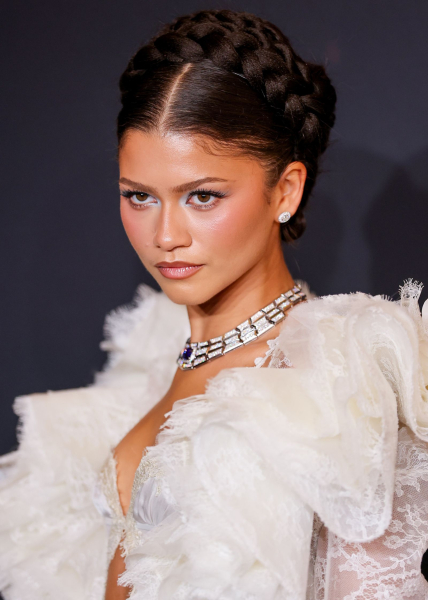
  • Nicole Kidman, Hollywood’s Chameleon, Only Wants to Look Like Herself

    Nicole Kidman, Hollywood’s Chameleon, Only Wants to Look Like Herself

    Nicole Kidman on red carpetNicole KidmanPhoto: Getty ImagesSave StorySave this storySave StorySave this story

    Nicole Kidman has received countless accolades in her decades-long career, thanks to her chameleon-like abilities on-screen. (Who can forget that prosthetic nose in The Hours?) Off-screen, though, she only wants to look and feel like herself.

    “I’ve got to be able to walk a red carpet and feel comfortable,” she says, “feel like myself and feel very free. If I feel too confined, that won’t be good for anyone. That ability to feel free and normal in those really extreme situations, I’m wired for that now.”

    It turns out that sense of freedom is not innate. It’s something that has come with age to Kidman, who is 59. “I started modeling at 14 and 15, and I started acting at the same time. I wanted to be an actress, but I was using the modeling to make money so that I could fund my acting,” she says. “People used to always say to me, ‘When you grow up, you’re gonna be so pretty. I was like, ‘Huh?’” The backhanded compliments did their damage. “I’d look in the mirror and I’d go, What does that mean? I wanna be pretty now. But I suppose I was a gawky kind of teenager.” Kidman, 5’10 even then, towered over her peers—“I was all arms and legs, and I didn’t have control over my body, in a way’” she says—and lamented not having pin-straight, blonde hair.

    Those early tests to her confidence didn’t hamper her acting career; if anything they may have fueled it through an astonishing series of memorable roles. In 2026, she’s had another busy year (the new season of Lioness debuted this month, and the sequel to cult classic Practical Magic is slated for release in September). She also fronts a video series, The Many Sides of Radiance, a campaign for Clé de Peau Beauté, unveiled Monday, for which she has served as a spokesperson since last year. That series focuses on her acting work, her work as a producer, and her advocacy for fellow women film directors and actors.

    Nicole Kidman sitting in a director's chair in a sequined dress.Nicole Kidman in Clé de Peau Beauté's “The Many Sides of Radiance” campaign.Courtesy of Clé de Peau Beauté

    It’s what Kidman calls “the many sides of myself.” In pursuit of those different facets, she’s not a stranger to adventure, having done an Allure cover interview last year in a hyperbaric oxygen chamber. For her work on camera, she says, “I love the idea of creating a character. That’s what makeup costumes, hair, all of it—even changing the way you move, does.” Those are nuances she’s always been sensitive to. Prior to technicolor, she notes that movement coaches were de rigueur, and she’s enthused by their return. “They’re really utilizing how you can become different characters,” she says, “I have zero interest in playing myself on screen.”

    Looking back, she sees those criticisms from her earlier days from a different vantage point. “I understand what they were saying, in a way,” she says of past critics. “But I feel pretty now. I just go, okay, well, this is who I am. I’m grateful to have what I have and to be able to use it. I also think because of my coloring and the way in which my face is structured, I can morph and change so easily because I don’t really have any dominant features.” She’s also found different ways to modify her beauty routine, in that vein. “I do dermaplane, which I’d never done,” she says. “I started that about a year ago, and I feel like my moisturizer goes on more easily, the serums that I use. I’d been scared of it because I thought it’s like shaving. But it just gives my skin this natural exfoliation.”

    Other recent interests of Kidman’s go beyond beauty. A lover of tennis, she just finished watching Rafa, the Netflix documentary series on Rafael Nadal; reading Arundhati Roy’s memoir Mother Mary Comes to Me, and is knee deep in The Things We Never Say by Elizabeth Strout. “Some of those are odd recommendations,” she says recognizing the variances among her interests, “but that’s my cultural type.”

  • 8 Best Conditioners for Fine Hair 2026 That Won’t Weigh Down Strands

    8 Best Conditioners for Fine Hair 2026 That Won’t Weigh Down Strands

    Image may contain Body Part Face Head Neck Person Adult Accessories Earring Jewelry Cosmetics and LipstickBenjamin VnukSave StorySave this storySave StorySave this story

    The best conditioners for fine hair can make all the difference in giving you soft, hydrated, and voluminous hair without the weight. But finding the right one can be tricky. Some formulas overdo the moisture and leave hair limp, while skipping conditioner altogether leads to dryness, tangles, and breakage. Just like shampoos for fine hair, it pays to be selective.

    “While fine hair has a smaller fiber and absorbs products differently, it still craves the same essential nourishment as any other hair type—which comes down to the right mix of ingredients and how they’re distributed throughout your hair,” says Julie Dickson, a hairstylist based in New York City. “You want to avoid oversaturating and weighing the hair down.” It's important to strike the perfect balance: moisturize dry hair without buildup, strengthen without stiffness, and add body without the grease factor.

    Our Top Conditioners for Fine Hair

    • Best Overall: Rōz Foundation Conditioner, $39
    • Best for Curly Hair: Pattern Lightweight Conditioner, $29
    • Best for Damaged Hair: K18 Damage Shield Protective Conditioner, $39
    • Best Fragrance-Free: Seen Fragrance-Free Conditioner, $32

    Frequently Asked QuestionsAccordionItemContainerButtonLargeChevron

    • What makes the best conditioner for fine hair?
    • Should people with fine hair not use conditioner?
    • How do you rehydrate fine hair?
    • Meet the experts
    • How we test and review products
    • Our staff and testers

    We’ve asked hairstylists to share their expert picks for the best conditioners for fine hair—so you can finally find the right one for your hair type.

    Best Overall: Rōz Foundation Conditioner

    Roz Foundation Conditioner in branded component on a light gray backgroundSave to wishlistSave to wishlist

    RŌZ

    Foundation Conditioner

    $39

    Amazon

    $42

    Nordstrom

    $42

    Sephora

    Allure contributing commerce editor Deanna Pai after using the Roz Foundation Conditioner

    Allure contributing commerce editor Deanna Pai after using the Roz Foundation Conditioner

    Deanna Pai

    Why we love it: When celebrity stylist Mara Roszak—whose A-list clients like Emma Stone, Olivia Wilde, and Zoe Saldana keep her on speed dial—launched her first hair-care line, we knew it would be a game-changer. And sure enough, it didn’t just deliver; it also snagged a 2023 Best of Beauty Award. “The Rōz Foundation Conditioner is exactly what it sounds like: foundational." says Dickson. “It’s perfectly balanced—lightweight but hydrating, strengthening but never heavy.” The sulfate-free shampoo also has walnut oil, packed with omega-3 fatty acids that help strengthen strands and shield hair from damage, keeping it healthier and more resilient. “It works beautifully on both virgin and color-treated hair, providing instant nourishment while supporting long-term repair,” says Dickson.

    Tester feedback from contributing commerce editor Deanna Pai

    AccordionItemContainerButtonLargeChevron

    “My 2B to 2C hair is fine but dense, so I ask a lot of my conditioner: frizz control and smoothing, but not too heavy. (I’m like Goldilocks, the hair edition.) This conditioner walks the line beautifully, with enough moisture to keep frizz to a minimum while still leaving my curls voluminous and defined, even at the crown where it otherwise tends to fall flat. Plus, I love the pump bottle, which just looked really nice in my shower and made it feel luxurious to dispense.” —Deanna Pai, contributing commerce editor

    More to know

    AccordionItemContainerButtonLargeChevron

    • Key ingredients: ceramides, pea peptide, walnut seed extract, ginger root extract
    • Fragrance-free: no
    • Silicone-free: yes

    Best for Volumizing: Virtue Full Volumizing Conditioner

    Virtue Full Volumizing Conditioner in branded component on a light gray backgroundSave to wishlistSave to wishlist

    Virtue

    Full Volumizing Conditioner

    $44

    Amazon

    $44

    Nordstrom

    $44

    Dermstore

    Allure contributing commerce writer Christa Joanna Lee after using the Virtue Full Volumizing Conditioner

    Allure contributing commerce writer Christa Joanna Lee after using the Virtue Full Volumizing Conditioner

    Christa Joanna Lee

    Why we love it: At Allure HQ, Virtue is always top of mind for its cutting-edge approach to hair care—and the pros agree when it comes to this Best of Beauty Award winner. “Virtue’s Full Conditioner is designed to deliver volume, strength, and lightweight hydration to fine hair—all without sulfates, parabens, or silicones,” says Kristina Maccaro, a colorist based in Jersey City, New Jersey. The brand’s proprietary Alpha Keratin 60k is a protein that repairs and strengthens hair from the inside out. It’s also infused with hydrolyzed quinoa to lock in moisture and biotin to support overall hair health. “In my opinion, the formula works best for anyone with fine hair looking to prioritize volume over adding intense hydration,” says Maccaro. This is a great daily conditioner for fine hair, but “for people looking for extra moisture or to repair very dry or damaged hair, they may need to incorporate an additional deep-conditioning mask or treatment,” says Maccaro.

    Tester feedback from contributing commerce writer Christa Joanna Lee

    AccordionItemContainerButtonLargeChevron

    “Virtue has completely redefined my expectations on what my in-shower hair products should do. The Full Volumizing Conditioner gives me all the slip and softness I want for easy detangling, but it never leaves my hair feeling flat or lifeless. The texture is everything—it's not so rich that it weighs my fine hair down, but not so lightweight that it feels like it's not absorbing anything. The biggest difference shows up at my roots and ends: My roots keep their lift while my ends stay soft, smooth, and less frizzy." —Christa Joanna Lee, contributing commerce writer

    More to know

    AccordionItemContainerButtonLargeChevron

    • Key ingredients: phospholipids, pink pomelo, artichoke leaf
    • Fragrance-free: no
    • Silicone-free: no

    Best for Frizzy Hair: Ouai Fine Hair Conditioner

    OUAI Fine Hair Conditioner in branded component on a light gray backgroundSave to wishlistSave to wishlist

    Ouai

    Fine Hair Conditioner

    $32

    Amazon

    $32

    Ulta Beauty

    $32

    Sephora

    Why we love it: Maccaro often reaches for Ouai’s Fine Hair Conditioner when people with fine hair sit in her chair. “It enhances softness, adds body, and boosts shine—without the heavy residue most conditioners leave behind,” she says, adding that her clients notice a difference after one or two washes. Its efficacy comes from a combo of biotin to strengthen, keratin to smooth, and chia seed oil to deeply hydrate, yet keeping strands airy. The pros also love it for its texture: “It’s so creamy but lightweight, and it moves easily through your hair and cleanly rinses,” she says. Plus, the addictive scent—which founder Jen Atkin named after Mercer Street in New York City—"is subtle and isn’t overpowering after your hair is styled," says Maccaro.

    More to know

    AccordionItemContainerButtonLargeChevron

    • Key ingredients: biotin, hydrolyzed keratin, chia seed oil
    • Fragrance-free: no
    • Silicone-free: no

    Best for Oily Hair: Kérastase Spécifique Fondant Densité

    Kérastase Spécifique Fondant Densité in branded tube component on a light gray backgroundSave to wishlistSave to wishlist

    Kérastase

    Spécifique Fondant Densité

    $50

    Amazon

    $50

    Sephora

    Why we love it: If you're worried that conditioner will make limp, oil-prone hair look greasy even faster, reach for a lightweight formula like Kérastase’s Spécifique Fondant Densité instead of a buttery one. Glycerin helps keep hair hydrated, while lightweight conditioning polymers and ceramides smooth the hair cuticle and reduce tangles without the rich, heavy feel of more emollient formulas. “It’s lightweight enough to hydrate exactly where fine hair needs it, yet maintains body,” says Kenna Kennor, a hairstylist based in Brooklyn, New York. It also has a familiar skin-care ingredient, salicylic acid, to dissolve excess sebum and product buildup on the hair. “If you have an oily scalp, make sure to focus your conditioner on your mid-lengths to ends only,” says Kennor.

    Tester feedback from contributing commerce writer Christa Joanna Lee

    AccordionItemContainerButtonLargeChevron

    “My long hair has been shedding more than usual lately, so these days I'm doing everything I can to hold on to whatever volume I have left. My scalp and hair are also a bit of a mystery these days—it swings between oily and dry—so I'm particular about conditioner. If it's too slippery and my hair’s going through an oily phase, it almost feels like it slides right off my hair instead of actually conditioning it. This one has just enough weight to smooth through my lengths without tugging, but it's still lightweight enough that my hair never feels limp or gets greasy faster. My ends feel soft, my hair looks refreshed, and my thinning hair looks a little fuller thanks to the way it plumps each strand without leaving behind any crunch.” —Christa Joanna Lee, contributing commerce writer

    More to know

    AccordionItemContainerButtonLargeChevron

    • Key ingredients: salicylic acid, ceramides, glycerin
    • Fragrance-free: no
    • Silicone-free: no

    Best for Curly Hair: Pattern Lightweight Conditioner

    Pattern Lightweight Conditioner in branded tube component on a light gray backgroundSave to wishlistSave to wishlist

    Pattern

    Lightweight Conditioner

    $29

    Amazon

    $29

    Nordstrom

    $29

    Sephora

    Why we love it: Fine, curly hair can feel like it's asking for the impossible: Curls naturally crave moisture, but fine strands are easily weighed down by rich conditioners. Pattern’s Lightweight Conditioner strikes that delicate balance (we'd expect nothing less from curly queen Tracee Ellis Ross' brand). Specifically formulated for fine curls, the silicone-free formula pairs glycerin, panthenol, lightweight conditioning agents, and coconut oil to hydrate and detangle, while preserving movement and bounce. Irish moss helps keep curls soft and moisturized, while biotin conditions the hair. “It never drags down the curl pattern or flattens the root,” says Kennor. If your curls don't need a full shampoo, this conditioner also doubles as a lightweight co-wash.

    More to know

    AccordionItemContainerButtonLargeChevron

    • Key ingredients: glycerin, coconut oil, Irish moss, biotin, panthenol, aloe vera
    • Fragrance-free: no
    • Silicone-free: yes

    Best for Damaged Hair: K18 Damage Shield Protective Conditioner

    K18 Damage Shield pH Protective Conditioner in branded bottle component on a light gray backgroundSave to wishlistSave to wishlist

    K18

    Damage Shield Protective Conditioner

    $39

    Amazon

    $39

    Sephora

    Why we love it: Fine hair is often more vulnerable to everyday damage—because each strand has a smaller diameter, routine brushing, heat styling, and even tight ponytails can lead to breakage more quickly than with thicker hair. K18’s Damage Shield Protective Conditioner, a 2024 Allure Best of Beauty Award winner, utilizes the brand's signature K18Peptide to replenish proteins, while a fortifying ceramide blend smooths the cuticle and reinforces weak spots. A biotech-derived polysaccharide also shields strands from pollution and other environmental aggressors. "It's repairing at the strand level, not just coating things, so the hair feels genuinely stronger," says Kennor. You might assume a reparative formula like this would feel heavy, but lightweight sweet almond and jojoba oils soften and detangle without weighing fine hair down.

    Editor tip

    AccordionItemContainerButtonLargeChevron

    Spend a lot of time outdoors? This conditioner also protects your hair from UV damage for up to three days.

    More to know

    AccordionItemContainerButtonLargeChevron

    • Key ingredients: K18peptide, ceramides, biotech-derived polysaccharide jojoba esters, jojoba oil, sweet almond oil
    • Fragrance-free: no
    • Silicone-free: yes

    Best Fragrance-Free: Seen Fragrance-Free Conditioner

    SEEN Leave-In Conditioner, Fragrance-Free white bottle with black pump cap on light gray backgroundSave to wishlistSave to wishlist

    SEEN

    Fragrance-Free Conditioner

    $32

    Amazon

    $32

    Ulta Beauty

    Why we love it: Even if you're careful to keep conditioner off your scalp, it still runs down your face, neck, and body in the shower, which can lead to irritation. If you're sensitive to fragrance, Seen's Fragrance-Free Conditioner, a go-to for Kennor, keeps things refreshingly simple. The minimalist ingredient list relies on glycerin to draw in moisture and bisabolol to soothe sensitive skin, while shea butter-derived emollients soften and detangle sans the rich, buttery feel that can leave fine hair looking limp. If you have highly reactive skin, you'll appreciate that it has earned the National Eczema Association's Seal of Acceptance. This means the formula has been reviewed for ingredients that are less likely to irritate sensitive or eczema-prone skin.

    More to know

    AccordionItemContainerButtonLargeChevron

    • Key ingredients: glycerin, bisabolol
    • Fragrance-free: yes
    • Silicone-free: yes

    Best for Color-Treated Hair: Biolage Volume Boost Conditioner

    Biolage Volume Bloom Conditioner in branded component on a light gray backgroundSave to wishlistSave to wishlist

    Biolage

    Volume Boost Conditioner

    $26

    Amazon

    $26

    Ulta Beauty

    Why we love it: If your hair's been through the wringer thanks to bleach, highlights, or chemical treatments, Biolage’s Volume Bloom Conditioner fits the bill with a gentle, color-safe formula. “Its key ingredient, cotton extract, helps plump the hair for added fullness,” says Gina Rivera, a hairstylist based in Las Vegas. “I also love this conditioner because it’s silicone-free and rich in texture, yet it doesn’t weigh the hair down.” This silicone-free formula gives fine hair a plump, bouncy boost, delivering long-lasting volume and hydration. “I usually recommend silicone-free conditioners like this one to help maintain moisture and prevent hair from drying out in the long run,” says Rivera.

    More to know

    AccordionItemContainerButtonLargeChevron

    • Key ingredients: cotton extract, hydrolyzed soy protein, starch acetate
    • Fragrance-free: no
    • Silicone-free: yes

    Frequently Asked Questions

    What makes the best conditioner for fine hair?

    Fine hair isn’t just about volume—it can also be prone to brittleness, dryness, and breakage, so the right conditioner needs to do more than just add body. “It should strengthen, hydrate, and boost volume for long-term hair health,” says Dickson.

    If you’re looking to strengthen hair, consider conditioners with “ginger root that can enhance the individual hair shaft diameter while soothing the scalp, pea peptides that are a weightless hair strengthener, and walnut oil, which lightly strengthens and protects while adding shine,” she says. For hydration, “aloe vera is your go-to for deep moisture and softness, while glycerin acts like a moisture magnet, keeping hair hydrated without making them feel heavy,” she says.

    Be mindful of volumizing conditioners, as not all are created equal. “Many volumizing products actually focus on chelating the hair to create instant volume and lift—I call these ‘quick-fix’ products,” Dickson says. “They work great at first, but can physically weaken and compromise the hair over time.” Instead, if fullness and bounce are the goals, she recommends seeking humectants for lightweight hydration.

    Should people with fine hair not use conditioner?

    Fine, flat hair absolutely needs a moisturizing conditioner—but the right kind and how often you use it are key. Skipping conditioner can leave fine hair dry, tangled, and prone to breakage, but using the wrong one can weigh it down. “Fine hair can be more fragile, so it's essential to use conditioners with lightweight proteins to help maintain the hair's elasticity,” says Rivera.

    However, she advises that “proteins have their place, but they are not to be overused; too much protein can have adverse effects. I recommend a protein treatment once or twice a month and using a more hydrating conditioner between treatments.” For everyday hydration, use lightweight humectants like glycerin and aloe vera—they’ll keep your hair soft and moisturized sans greasy buildup. When using conditioner, stick to the mid-lengths and ends—skip the roots to keep hair voluminous.

    How do you rehydrate fine hair?

    To rehydrate fine hair, focus on lightweight, moisture-boosting ingredients that won’t weigh it down. “Humectants are a great way to give fine hair body,” says Rivera, so look for ingredients like glycerin, panthenol, or sodium PCA to draw in hydration without heaviness. For added strength, “Wheat protein is a lightweight protein that creates body for thin, fine hair,” making it a great addition to your routine. Rivera suggests being mindful of some silicone conditioners, as “they can be too heavy and weigh the hair down,” she says. If hair still feels dry, a weekly hydrating hair mask or leave-in conditioner can boost hydration further.

    Meet the experts

    • Julie Dickson, a hairstylist and founder of Joon Drop Salon in New York City
    • Kenna Kennor, a hairstylist and founder of Kennaland based in Brooklyn, New York
    • Kristina Maccaro, owner and colorist at Love Lane Salon in Jersey City, New Jersey
    • Gina Rivera, a hairstylist and founder of Phenix Salon Suites based in Las Vegas

    How we test and review products

    We always enlist a range of testers for our makeup vertical, but hair-care products and tools are another story. While there are certainly products that can be used across different hair textures, lengths, curl patterns, thicknesses, colors (natural and unnatural), and needs, hair products are often created with specific consumers in mind. Many are created in order to address a concern (dandruff, breakage, brittleness) or to work most effectively for a specific hair type (4C curls, wavy hair, gray hair). You wouldn’t want to pick up a purple shampoo that’s only been reviewed by someone with, say, auburn hair, or a diffuser that’s never been tested by anyone with curls—right?

    For our review of the best conditioners for fine hair, we enlisted the help of multiple editors, writers, contributors, and hair experts—many of whom want thicker, more voluminous hair. Testers considered performance across four primary categories: efficacy, texture and experience, fragrance, and packaging. For more on what's involved in our reporting, check out our complete reviews process and methodology page.

    Our staff and testers

    A beauty product is a personal purchase. You might be searching for a face cream to address persistent dryness or a new nail product to add to your Sunday self-care routine; you may simply be browsing around for the latest launches to hit the hair market. No matter what you seek or your individual needs and concerns, Allure wants to ensure that you love anything we recommend in our stories. We believe that having a diverse team of writers and editors—in addition to the wide range of outside testers and industry experts we regularly call upon—is essential to reaching that goal.

    After all, can we really say a skin-care product is the "best" for people over 50 if the only testers we've solicited opinions from folks who have yet to hit 30? Can we honestly deem a high-end diffuser worthy of your hard-earned cash if it’s never been tested on curls? We're proud that our staff spans a wide range of ages, skin tones, hair textures, genders, and backgrounds, which means that we are able to fairly assess any beauty product that comes into the beauty closet.
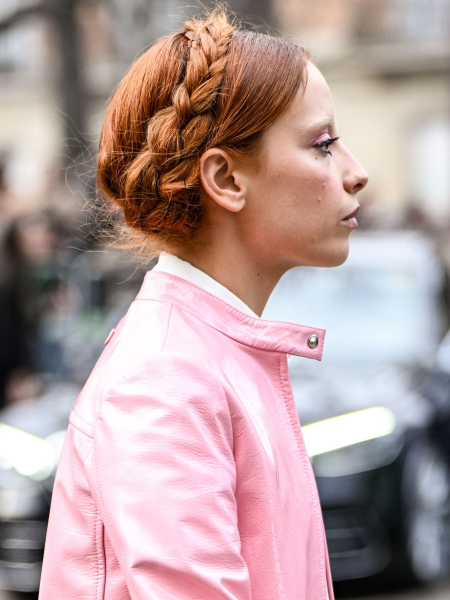
  • Tate McRae Covered Herself in Gold at Lollapalooza—See the Photos

    Tate McRae Covered Herself in Gold at Lollapalooza—See the Photos

    Tate McRae wears full gold body paint onstage at Lollapalooza.Getty ImagesSave StorySave this storySave StorySave this story

    Tate McRae is (literally) so golden. When the musician closed out her set at Lollapalooza 2026 in Chicago, she didn't just wave goodbye and leave the stage—she took things to the next level of pop-star glamour and dunked almost her entire body in a glimmering metallic gold paint. And we're not talking body shimmer or glitter, though McRae does often channel a 2000s aesthetic in her performance looks. Nope! This was thick, drippy, molten gold, as though she was turning herself into a statue onstage. (Cue the James Bond theme music!) McRae was completely covered in the metallic liquid from her neck downward, even her fingernails, and after seeing video footage of the big show-stopping moment, we had some questions—namely, was this actually paint, and if so, what kind and how long did it take to remove?
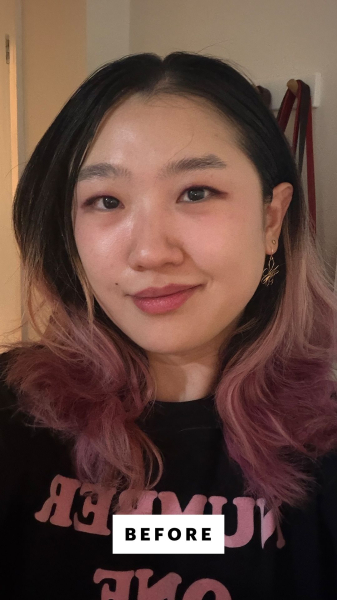
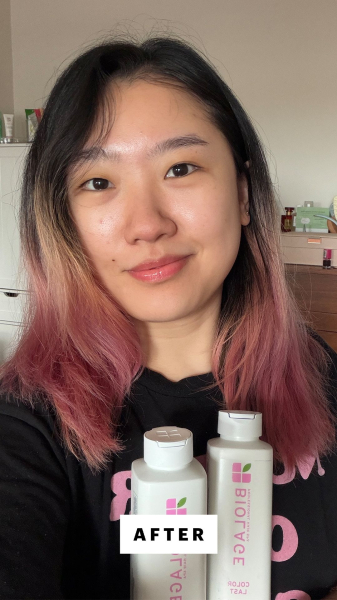
    So we reached to McRae's makeup artist Kali Kennedy for answers!

    According to Kennedy, it wasn't paint at all—it was methyl cellulose, copper, and water mixed into a paint-like consistency. The product was actually made by Blair Adhesives, the same folks who create the slime for the Nickelodeon Kids Choice Awards, Kennedy explains, so they knew how to make a material that would shine onstage. While Kennedy isn't sure exactly how much of the liquid was used for the stage show, McRae's team did use 135 gallons for the gold bath video shown in the Lollapalooza visuals; Kennedy estimates the stage gold bath was about half that size. Kennedy adds that McRae and her team had been talking about the idea for months but weren't sure they could pull it off, but they really, really did.

    Surprisingly, there was “no real skin prep” involved pre-gold dip, save for what Kennedy describes as a “healthy coat” of body moisturizer. However, as soon as McRae left the stage, there was a group waiting to immediately wipe away the excess product before she hopped in the shower. “During the Lollapalooza gold bath I was hiding behind the staircase waiting to clean her off and her last choreo move sent gold splatter backstage,” Kennedy shares. “I’m pretty sure it’s still in my hair.”

    Tate McRae wears headtotoe body paint onstage.Getty Images

    McRae's hair, typically a warm bronde color, also looked quite a bit brighter, much more golden blonde than brunette. As she posed onstage in her full-body paint, her hair practically disappeared into the molten gold.

    And gold was indeed a factor in the overall glam for the evening. “Tate naturally looks so good in warm golden tones,” Kennedy shares of the color motif. “Her golden tan is such a signature part of her look. I wanted to make sure her eyes really popped, so we did a heavier liner than normal, and I also went with more peachy tones to warm her up in a way that seemed to give dimension next to so much gold.”

    Kennedy used Neutrogena products on the star (she's an ambassador for the brand), prepping McRae’s skin with Hydro Boost Hyaluronic Acid Rejuvenating Serum and Hydro Boost Hyaluronic Acid Water Gel, then applied Healthy Skin Liquid Makeup in the shade Medium Beige 80 and Healthy Skin Radiant Cream Concealer in Toffee Medium 03. Kennedy combined Healthy Glow Blush Stick in shades Peachy Keen and Pink Petal on the inner cheek and paired Intense Gel Liner in Jet Black 10 Precision Liquid Eyeliner in Jet Black 01 on the star's lids, finished with “a healthy coat” of Healthy Volume Mascara in Carbon Black 01. And though you can't easily see them underneath all that gold liquid, there were also gems applied to McRae's eyes and body for an “extra pop,” shares Kennedy. To say the overall look shined onstage may be the understatement of the summer!